The short answer
Test first, then buy the cheapest step that fixes what the lab finds. If the water carries sand or grit, start with the Frizzlife JB40-100 spin-down filter at $69.99, which you flush instead of replacing. If the test finds bacteria and little iron, the Aquasana Rhino Well Water with UV at $3,498 bundles carbon, KDF media and a UV filter. For light iron, the iSpring WGB32BM is $535.99.
We earn a commission when you buy through some links on this site, at no extra cost to you. It never changes what we recommend.
Test first at a state-certified lab (EPA advises yearly testing for coliform, nitrate, TDS and pH). Sources: EPA private wells; Nebraska Extension G1714; Penn State Extension.
Our picks
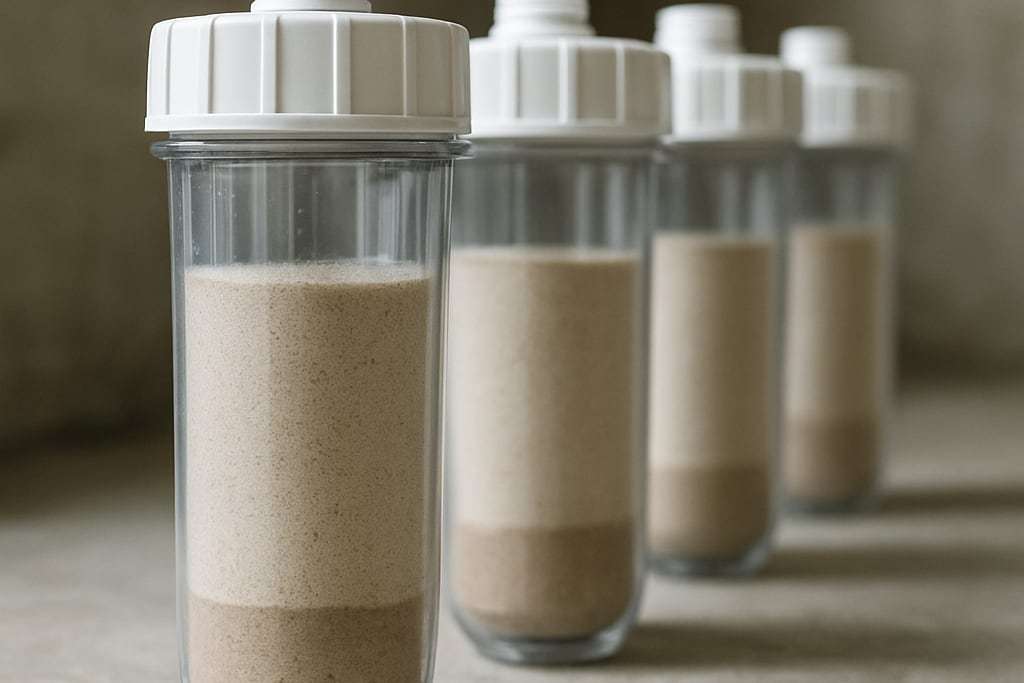
JB40-100 and JG40-100 spin-down sediment filters
Sediment pre-filter (whole-house)
Reusable 40 and 100 micron spin-down filter that you flush instead of replacing: $69.99, or $79.99 with a pressure gauge (JG40-100, 20 GPM).
- Flow rateJG40-100 listed at 20 GPM
- Micron rating40 and 100 micron
- DesignReusable, flushable spin-down filter with a built-in scraper; 1 in and 3/4 in NPT; for city or well water
Listed price$69.99 (JB40-100); $79.99 (JG40-100, adds a pressure gauge)
Check price at Frizzlife10% off with code SOFTWATER10
Specs & trade-offs
Sediment only.
- Micron rating
- 40 and 100 micron
- Flow rate
- JG40-100 listed at 20 GPM
- Design
- Reusable, flushable spin-down filter with a built-in scraper; 1 in and 3/4 in NPT; for city or well water
- Treatment
- Sediment only; no chemical treatment
- Reusable: you flush it instead of buying cartridges
- Works as a first stage ahead of an iron filter, softener or UV on a well
- Sediment only: does not treat chemicals, taste, iron or bacteria
- No NSF or other certification is shown on the page
Rhino Well Water with UV
Whole-house filter with UV (well water)
$3,498 with carbon, KDF media, pre- and post-filters and a UV filter certified to NSF/ANSI 55 Class B (supplemental treatment).
- Capacity500,000 gallons or 5 years; UV lamp every 12 months
- Flow rateBase unit 7.0 GPM rated, 14.7 GPM peak; UV unit 6.0 GPM rated, 15.0 GPM peak
- UV certificationUV filter certified to NSF/ANSI 55 Class B (supplemental treatment)
Listed price$3,498
Check price at AquasanaSpecs & trade-offs
5-year warranty. Iron may need a separate filter.
- Flow rate
- Base unit 7.0 GPM rated, 14.7 GPM peak; UV unit 6.0 GPM rated, 15.0 GPM peak
- Capacity
- 500,000 gallons or 5 years; UV lamp every 12 months
- Included
- Rhino system with carbon media upgrade, KDF media, 20 in pre-filter, post-filter and UV filter
- UV certification
- UV filter certified to NSF/ANSI 55 Class B (supplemental treatment)
- Warranty
- 5-year limited; 90-day satisfaction guarantee
- UV filter included in the price, so there is no separate UV purchase for a well
- Pre-filter, post-filter and carbon upgrade included
- Class B UV is supplemental only and does not make untreated well water safe
- Warranty is 5 years, half the 10 years on the standard Rhino
- Iron may need a specialized filter ahead of it (Aquasana's note for the Rhino line)
UV Water Purification System (BlackComb UV Disinfectant System, 15 GPM)
UV disinfection
15 GPM UV unit that needs iron under 0.3 ppm and hardness under 7 gpg.
- Flow rateUp to 15 GPM
- Size and connection4 in x 20 in; 1 in MNPT
- Lamp replacementEvery 365 days; bulb $118.65; sleeve $83.99
Listed priceStarting at $1,036
Check price at SpringWellSpecs & trade-offs
The lamp is $118.65 a year. Starting at $1,036.
- Flow rate
- Up to 15 GPM
- Size and connection
- 4 in x 20 in; 1 in MNPT
- Lamp replacement
- Every 365 days; bulb $118.65; sleeve $83.99
- Pressure and temperature
- 10-150 PSI; 36-104 F
- Optional prefilter
- 5-micron sediment canister, +$83.23
- Water requirements
- Hardness under 7 gpg; iron under 0.3 ppm; tannins under 0.1 ppm
- Lamp replacement schedule and part prices are listed on the page
- Optional 5-micron sediment canister available
- Needs clear, pretreated water (hardness under 7 gpg, iron under 0.3 ppm, tannins under 0.1 ppm)
- UV dose and NSF or EPA registration are not stated, and power use is not given
- Lamp replacement every year costs $118.65, plus $83.99 for a sleeve when needed
WGB32BM (sediment, carbon and iron/manganese catalytic media)
Whole-house filter (sediment, carbon, iron/manganese)
Sediment, carbon and iron/manganese media in one unit for $535.99: iron up to 3.0 ppm, manganese up to 1.0 ppm, 15 GPM peak.
- CapacityStages 1-2: 100,000 gallons; stage 3: 50,000 gallons at 3.0 ppm iron
- Peak flow15 GPM
- Stages5-micron polypropylene sediment; coconut shell carbon block; iron/manganese catalytic media (no chemicals)
Specs & trade-offs
No certification is stated for the complete system.
- Peak flow
- 15 GPM
- Stages
- 5-micron polypropylene sediment; coconut shell carbon block; iron/manganese catalytic media (no chemicals)
- Iron and manganese rating
- Iron up to 3.0 ppm; manganese up to 1.0 ppm
- Capacity
- Stages 1-2: 100,000 gallons; stage 3: 50,000 gallons at 3.0 ppm iron
- Replacement
- Every 6-12 months
- Warranty
- 1 year; lifetime tech support after registering
- Treats iron and manganese without chemicals (catalytic media)
- Sediment and carbon stages in the same unit
- Does not reduce TDS, arsenic, nitrates, copper or lead
- No NSF/ANSI certification is stated for the complete system
- 1-year warranty
| Model | Best for | Type | Listed price |
|---|---|---|---|
| JB40-100 and JG40-100 spin-down sediment filters | Best first stage for a sandy well | Sediment pre-filter (whole-house) | $69.99 (JB40-100); $79.99 (JG40-100, adds a pressure gauge) |
| Rhino Well Water with UV | Best all-in-one with UV included | Whole-house filter with UV (well water) | $3,498 |
| UV Water Purification System (BlackComb UV Disinfectant System, 15 GPM) | Best UV add-on for a clean well | UV disinfection | Starting at $1,036 |
| WGB32BM (sediment, carbon and iron/manganese catalytic media) | Cheapest for light iron | Whole-house filter (sediment, carbon, iron/manganese) | $535.99 |
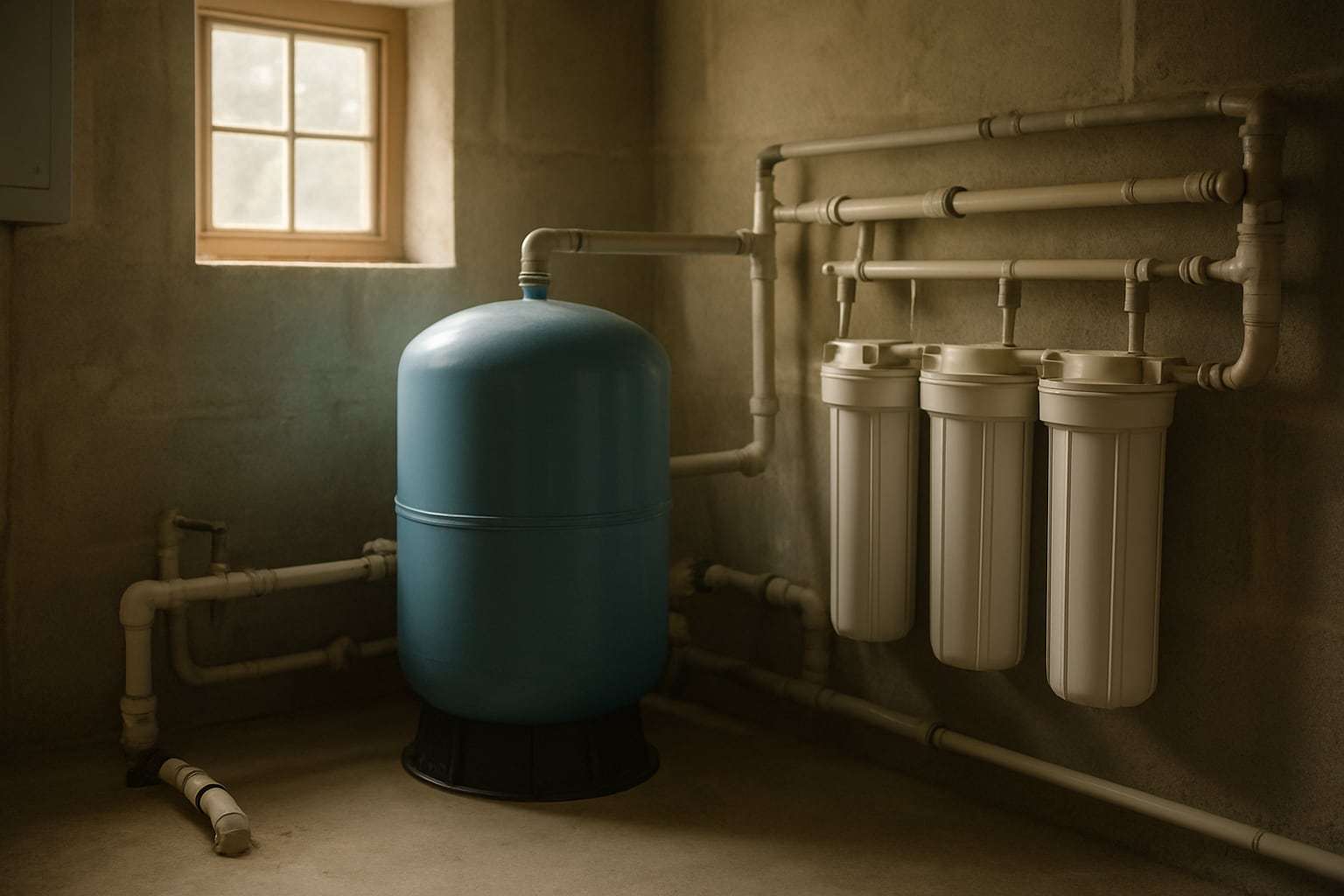
Well water has no single best filter. The right system depends on what your water test finds. Iron and sulfur need an oxidizing or air-injection step, sediment needs a filter placed first, and bacteria need a disinfection step such as UV that works only after the other treatment. A filter that handles iron does not kill bacteria, and a UV light does not remove iron or sediment. Start with a lab test, match each problem to one step, and then compare the four picks.
Each pick is described from the maker’s published specifications and extension research, not from our own testing. Prices change often, so confirm the figure on the seller’s page. For every filter side by side, see the comparison page.
Start with a lab test, not a product
The EPA advises owners of private wells to test once a year for total coliform bacteria, nitrates, total dissolved solids and pH. Add tests for anything you suspect, and test right away after flooding, after well repairs, or when the water changes in odor, color or taste. Use a state-certified lab, and ask your local health department which tests it recommends for your area. The full checklist is in our well water testing guide.
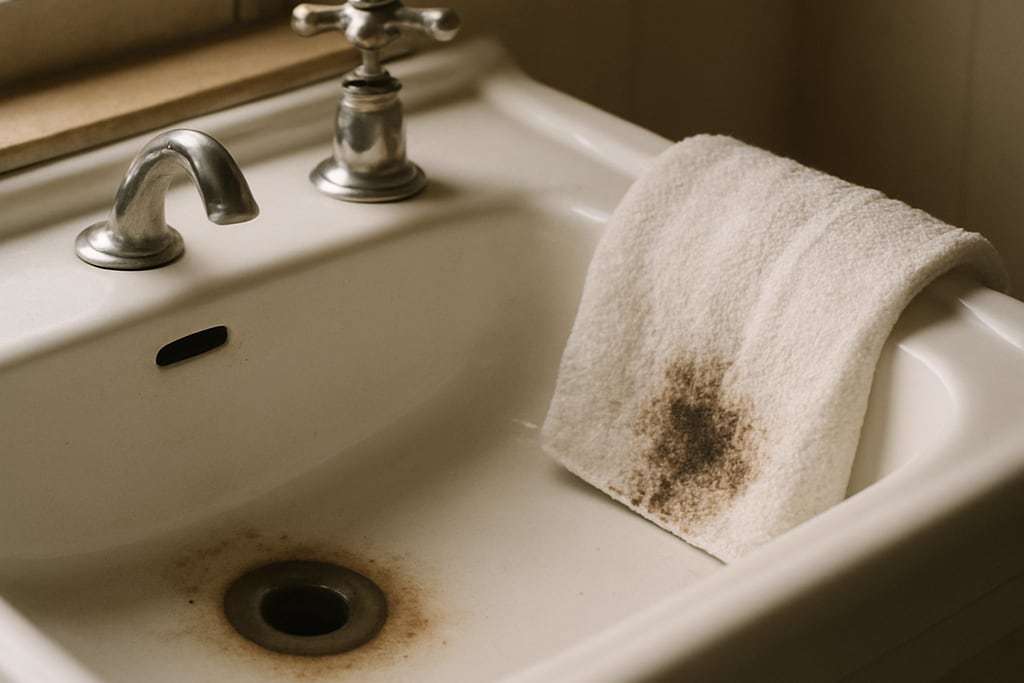
Ask the lab for numbers, not just high or low. For iron, ask for dissolved and total iron. The gap between the two shows how much iron has already turned into particles, which changes the treatment. Also ask for manganese, pH and hydrogen sulfide. Nebraska Extension recommends this set of tests before you choose any equipment. For black stains, see the manganese guide.
Match each problem to one treatment step
| What the test or your taps show | Treatment step | Where it goes |
|---|---|---|
| Sediment, grit or cloudy water | Sediment filter, 5-micron cartridge or spin-down | First |
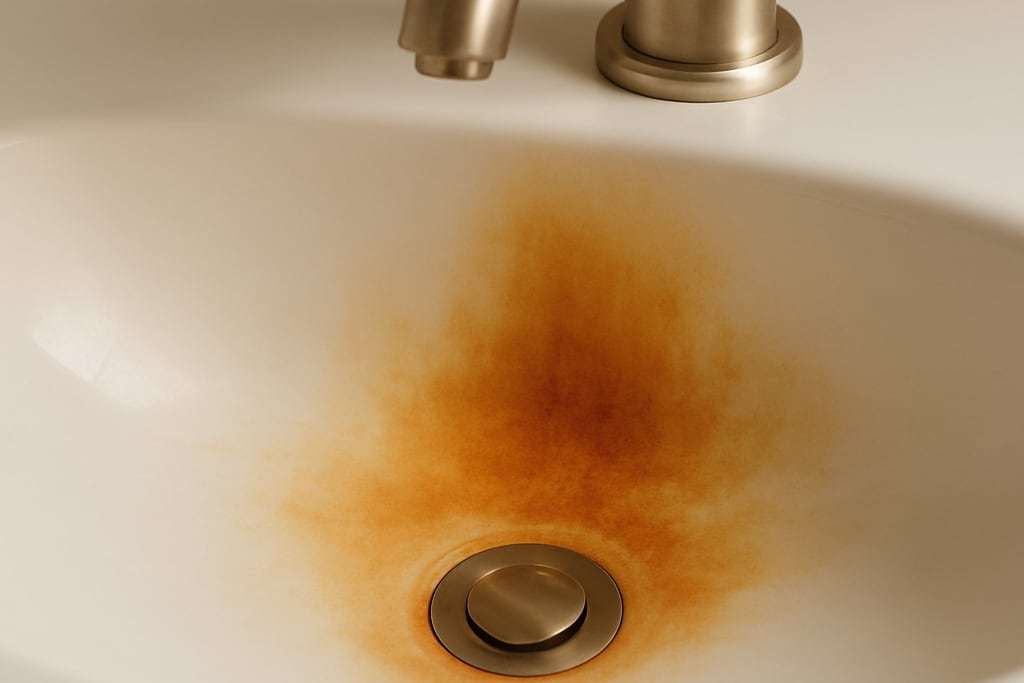
| Iron or manganese (stains, reddish water) | Oxidizing or air-injection iron filter; the iron filter guide compares them | After sediment |
| Hydrogen sulfide (rotten-egg smell) | Oxidizing filter or carbon, depending on the level | After sediment; see the sulfur smell guide |
| Bacteria (positive coliform test) | UV disinfection after pretreatment | Last |
The order matters. Sediment goes first to protect everything behind it. Iron should be removed before UV, because the SpringWell UV unit needs iron under 0.3 ppm. Follow each maker’s manual for the exact order. Carbon filters are for taste, odor and chlorine. University of Georgia Extension says they do not remove bacteria, nitrate, fluoride or most metal ions, so a carbon filter is never the whole answer for a well with bacteria.
The four picks and what each one solves
A micron rating tells you the particle size a sediment filter targets, and a lower number means a finer filter. The Frizzlife spin-down filters catch larger grit at 40 or 100 microns, while the iSpring WGB32BM has a 5-micron sediment stage. SpringWell sells an optional 5-micron sediment canister (+$83.23) ahead of its UV unit. Compare the rating with what your well driller or lab reports about sand or grit.
Frizzlife JB40-100 and JG40-100 (sediment only). Pick one when the problem is sand or grit. They are reusable spin-down screens, 40 and 100 micron, with a built-in scraper and no chemical treatment, so you flush them instead of buying cartridges. The JB40-100 is $69.99 and the JG40-100 adds a pressure gauge for $79.99 and is listed at 20 GPM. They go first so they protect everything behind them. No certification is shown, and they do nothing for iron, taste or bacteria.
Aquasana Rhino Well Water with UV (all in one). Pick it when you want one purchase that covers carbon filtering and bacteria on a well that is otherwise fairly clear. At $3,498 it includes the Rhino system with a carbon media upgrade, KDF media, a 20 inch pre-filter, a post-filter and the UV filter. The base unit is rated 7.0 GPM and the UV unit 6.0 GPM. The UV filter is certified to NSF/ANSI 55 Class B, which is supplemental treatment and does not make untreated well water safe. Aquasana says iron may need a separate filter, the media lasts 500,000 gallons or 5 years, the lamp changes every 12 months, and the warranty is 5 years, half the 10 years on the standard Rhino.
SpringWell UV (bacteria, after pretreatment). Pick it when a test shows coliform bacteria and the water is already clear, and you would rather build the system in steps. It needs iron under 0.3 ppm, hardness under 7 gpg and tannins under 0.1 ppm, so on an iron well it comes after the iron filter. It starts at $1,036 and the lamp is $118.65 a year. SpringWell does not state the UV dose or NSF registration, so ask for the class in writing. It does nothing for chemicals, iron or sediment.
iSpring WGB32BM (sediment, carbon, light iron). Pick it when iron is low, up to 3.0 ppm, manganese is up to 1.0 ppm, and you want sediment and carbon in the same skid for $535.99. Its iron and manganese media is rated for 50,000 gallons at 3.0 ppm iron, and iSpring says to replace the cartridges every 6 to 12 months. The warranty is one year. It does not treat bacteria, nitrate, arsenic, lead or copper.
One well may need two or three of these in sequence, sediment first and UV last. A well with only sediment may need one.
How to choose: four checks
1. Compare the ratings with your numbers. A rating of iron up to 3 ppm does not help if your lab reports more. Use the rating on the product page as a ceiling and leave a margin below it.
2. Check the flow rate. Brands often list a service rate and a peak rate. Size the system for peak demand in your home, meaning the number of bathrooms and fixtures that can run at once. A common installer rule of thumb is about 7 to 10 gallons per minute for two or three bathrooms. Treat that as a starting point, not a standard.
3. Read the certification, not the marketing. NSF/ANSI 42 covers aesthetic effects such as chlorine, taste, odor and iron. NSF/ANSI 53 covers health effects. UV systems carry NSF/ANSI 55, where Class A is the stronger level that allows microbiological claims and Class B is only supplemental. NSF/ANSI 61 covers materials and does not show that a filter removes anything. A product that was tested to a standard is not the same as one that is certified to it, so ask for the listing and check it in the NSF or WQA database.
4. Count the running cost. Cartridges, lamps and media all cost money over time. The SpringWell UV lamp is $118.65 a year, plus a sleeve at $83.99 every so often. Brand life figures are limits, not promises for your water.
Bacteria need a separate answer
If a test finds coliform bacteria, do not rely on a single filter. The UV unit’s NSF/ANSI 55 class is the key number. Class A is the level for water assumed to be contaminated, and Class B is supplemental treatment for water that is already disinfected. The Aquasana UV is Class B. Ask the maker for the UV dose and the NSF/ANSI 55 class in writing before you buy. The UV purifier guide goes through the details.
Your local health department can advise on the next step when bacteria are found, and a licensed well contractor can check the well itself. A filter cannot make a well safe on its own.
Who should skip these picks
- City water users. These picks are built for private wells. If your water comes from a utility, a whole-house water filter guide fits better.
- Anyone with nitrate, arsenic or lead above the limits. None of the four picks lists removal of those contaminants. Reverse osmosis can reduce nitrate and lead, according to the Connecticut public health guide, but reverse osmosis cannot be certified to remove 100 percent of anything. Choose a system certified for your exact contaminant.
- Anyone whose iron or sulfur is above the rating. A unit rated lower than your numbers will not do the job. Plan a different system or talk to a well contractor.
- Anyone looking for a product that removes everything. No single filter does that.
Buying mistakes to avoid
- Buying before testing. The test decides the system, not the brand.
- Comparing service flow with peak flow. Use the figure that matches your home.
- Reading “NSF tested” as “NSF certified for your problem.” Ask which standard and which claim.
- Treating a list price as a discount. Compare what you would actually pay, including the cartridges you will need later.
Installation and local rules
Local plumbing code and a licensed plumber or well contractor decide how each unit is connected and whether a permit is needed. This guide is an overview of what each step does, not an installation guide.
Frequently asked questions
Do I need a filter if I have a well?
Not always. Some wells need only a sediment filter or a softener, and others need several steps. Test first, because the results show which problems you have. A filter bought without a test may treat the wrong thing or miss the real problem.
Does a carbon filter make well water safe to drink?
No. Carbon helps with taste, odor and chlorine, but it does not remove bacteria, nitrate, fluoride or most metal ions. University of Georgia Extension advises using carbon only on water that is already microbiologically safe.
Can one filter remove iron, sulfur and bacteria?
Not one box. Iron and sulfur need an oxidizing or air-injection step, and bacteria need a disinfection step such as UV placed after pretreatment. The Rhino Well Water with UV bundles carbon, KDF and UV, and Aquasana notes that iron may need a separate filter. Check each rating against your own lab numbers, not against the highest figure on a product page.
Why does UV need clear water?
UV light has to reach the microbes, so the water must be clear. Iron and manganese can scale the quartz sleeve around the lamp and absorb UV. The SpringWell UV page asks for iron under 0.3 ppm, hardness under 7 grains per gallon and tannins under 0.1 ppm.
How often do well filters need changing?
It depends on the product and your water. The SpringWell UV lamp is every 365 days and the Aquasana Rhino Well Water UV lamp every 12 months. iSpring lists the WGB32BM cartridges every 6 to 12 months. The Frizzlife spin-down filter is flushed rather than replaced. Brand life figures are ratings under ideal conditions, not guarantees for your water.
Sources
- EPA: Protect your home's water (private wells)
- University of Georgia Extension: Bulletin 1542, activated carbon
- University of Nebraska Extension: NebGuide G1714, iron, manganese and sulfur
- SpringWell: UV Water Purification System
- Aquasana: whole house water filters
- Frizzlife: whole-house water solutions
- Connecticut Department of Public Health: Pub. 21, reverse osmosis