The short answer
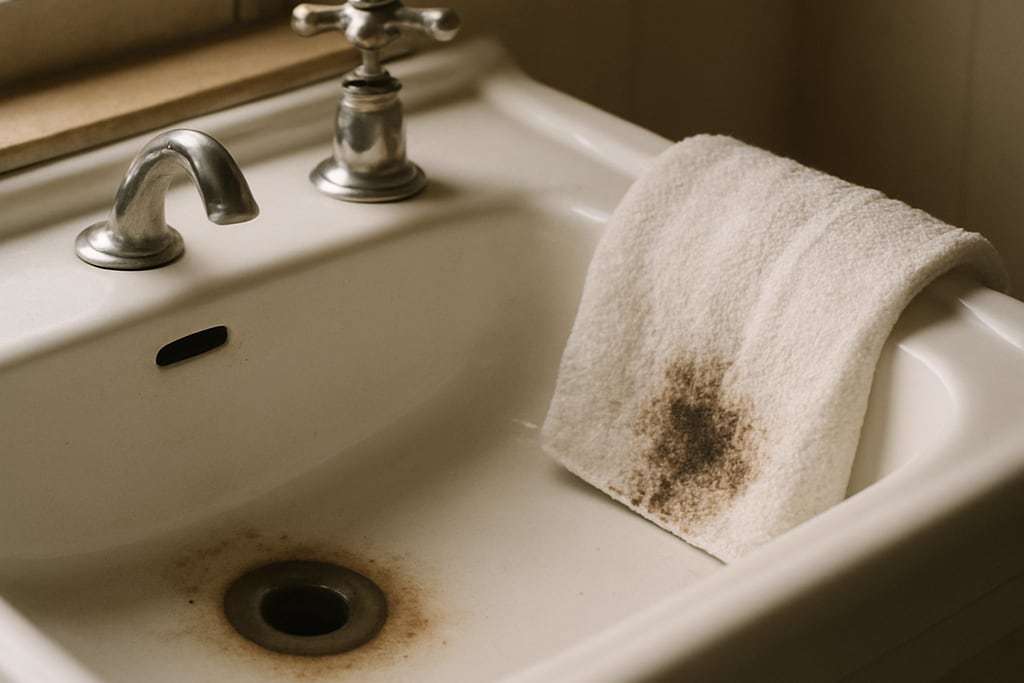
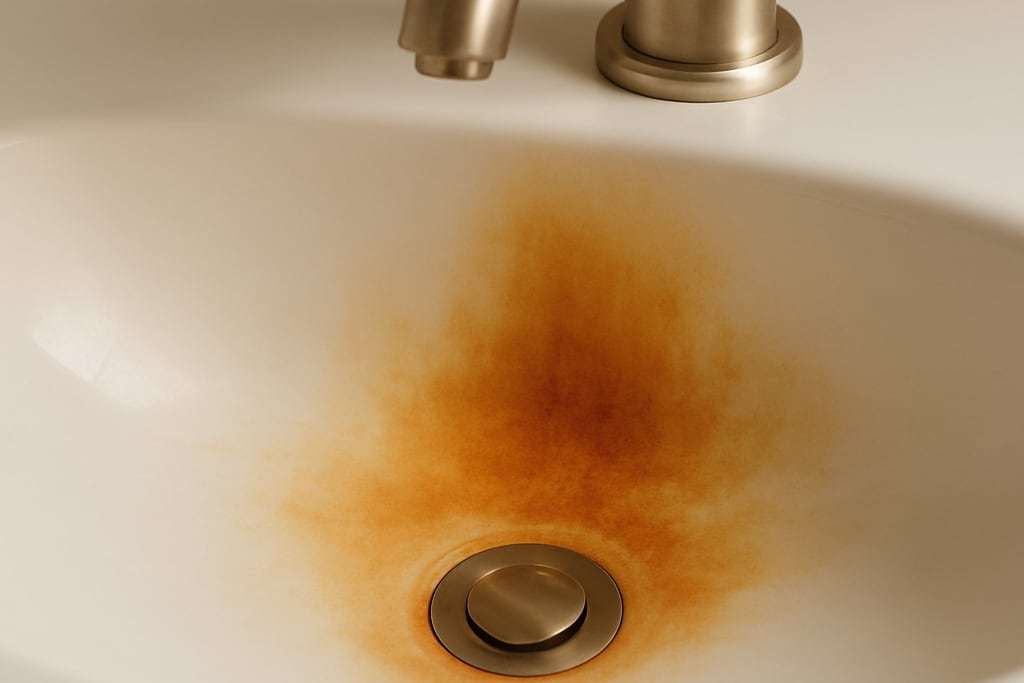
Iron in well water usually shows up as orange or brown stains on sinks, laundry and fixtures, or as water that looks clear at the tap and turns reddish after it sits. The fix depends on whether the iron is dissolved or already oxidized, and on how much manganese comes with it. The EPA guideline of 0.3 mg/L is an aesthetic level rather than a health limit, but iron above a softener's limit can reduce its effectiveness, oxidized iron clogs resin, and iron can scale a UV sleeve.
Test first at a state-certified lab (EPA advises yearly testing for coliform, nitrate, TDS and pH). Sources: EPA private wells; Nebraska Extension G1714; Penn State Extension.
Iron in well water usually shows up in one of two ways: orange or brown stains on sinks, toilets and laundry, or water that looks clear at the tap and turns reddish after it sits in a glass. Both come from the same source, but the fix depends on whether the iron is still dissolved or has already oxidized, and on how much manganese comes with it. This page explains how to tell which kind you have, what the limits mean, and what to do before you buy any equipment.
The EPA guideline for iron is 0.3 mg/L. It is a level for taste and appearance, not a health limit. Even so, iron above a softener’s limit can reduce its effectiveness, oxidized iron clogs resin, and iron can scale a UV sleeve. It also leaves the orange and brown stains most owners notice first.
Read the symptoms, then the lab report
Stains are the first clue, but they are not a measurement. A lab report gives you the numbers you need: dissolved iron, total iron, manganese and pH. Dissolved iron is what is still in solution in the well water. Total iron includes the particles that have already formed. The difference between the two tells you how much iron has already oxidized and can settle out in pipes, the water heater and fixtures.
Nebraska Extension recommends this lab set before choosing any equipment. It also asks for hydrogen sulfide, which causes the rotten-egg smell covered in our sulfur smell guide, because it changes which treatment works.
Dissolved iron and oxidized iron need different fixes
Dissolved, or ferrous, iron is clear when drawn and turns reddish-brown when it meets air. Ion exchange can take some of this iron out before it oxidizes, but only up to the unit’s rated limit. Oxidized, or ferric, iron has already turned into particles. Ion exchange cannot remove it, so it needs a filter. Penn State Extension says oxidized iron clogs softener resin, which is why a filter has to come ahead of a softener when red iron is present.
Water that sits in a tank or a toilet tank can turn red even when it started clear. If your water shows red particles at the tap, treat it as oxidized iron until a test says otherwise.
What iron does to your equipment
Iron affects more than the look of the water. Nebraska Extension says that above about 5 ppm, iron can reduce a softener’s effectiveness. Manganese and iron both affect UV systems, because they absorb UV light and scale the quartz sleeve, so UV units need iron under 0.3 ppm to work as designed. Iron and manganese also oxidize filter media. SpringWell’s CF page says so for its carbon and KDF filter and gives no numeric iron or manganese limit for it, which is one more reason to test before you buy.
Manganese is a separate limit
Manganese often comes with iron, and it has its own guidance. The EPA secondary level is 0.05 mg/L. Nebraska Extension advises against using water for infant formula above 300 micrograms per liter of manganese, and against drinking it above 1,000 micrograms per liter. Because the limits differ, do not assume that treating iron also treats manganese. The manganese guide covers the black stains, the numbers and the filters with a published rating. A combined iron and manganese oxidizing filter or a catalytic media filter addresses both, but only within its rating.
Iron bacteria are a different problem
Iron bacteria feed on iron, and they are a separate cause from simple dissolved iron. Nebraska Extension says shock chlorination can knock them back, but the effect is temporary, and repeated use can corrode well parts. Aeration is a poor fit for iron bacteria, so a simple aerator or a basic iron filter may not solve the problem on its own.
If you suspect iron bacteria, a licensed well contractor can look at the well and recommend a plan that fits your water. Your local health department can also advise on testing.
Match the treatment to the test
Once the lab has given you the numbers, the level decides the approach. Below about 5 mg/L of dissolved iron with low manganese, a softener with a rated iron limit may be enough. Higher levels call for an oxidizing filter, aeration or chemical oxidation, depending on the amount. Our iron filter guide explains each type and compares three iron filters, from $535.99 for light iron to a 30 ppm air-injection unit from $1,517. For a softener that states an iron limit, see the well water softener guide.
Iron is not the only thing your test should cover. EPA advises private well owners to test each year for total coliform bacteria, nitrates, total dissolved solids and pH, and to test right away after flooding, repairs or a change in how the water looks, smells or tastes. Use a state-certified lab. The full checklist is in our well water testing guide.
A practical order of steps
Work through the problem in this order. It saves money, because the test narrows the choice before you spend anything on equipment.
- Describe the problem precisely. Note where the stains or red water show up, which taps are affected, and whether the water is clear when first drawn. Write down any recent changes, such as a flood, a well repair or a new pump, because EPA advises a new test after changes like these.
- Get a full lab test. Ask for dissolved and total iron, manganese, pH, hydrogen sulfide and the standard private-well panel. Keep the report with the numbers, not just a pass or fail.
- Decide the form of the iron. If most of it is dissolved, a softener with a rated iron limit or an oxidizing filter may be enough. If most of it is already red, filtration has to come first.
- Choose the equipment and check the ratings. Compare each rating with your numbers, leave a margin, and get the certification and the warranty in writing.
- Retest after installation. A new test shows whether the treatment works, and it is cheaper than finding a problem after a stain has set.
Two mistakes to avoid
Do not add a softener with no iron rating and hope for the best: check the rated limit first, or plan an iron filter ahead of it. And do not use a salt-free conditioner for iron. SpringWell’s FutureSoft conditioner needs iron at 0 ppm, and conditioners do not remove hardness.
Who should get professional advice
If your test shows iron or manganese above the guidelines, if you find iron bacteria, or if you are changing the well or its pressure system, a licensed well contractor is the right first call. Local plumbing code and the contractor decide what equipment fits, where it connects and whether a permit is needed.
Frequently asked questions
Is iron in well water dangerous?
At the EPA secondary level of 0.3 mg/L, iron is a taste and staining problem rather than a health hazard, according to Nebraska Extension. Manganese is a separate concern, and Nebraska advises against using water for infant formula above 300 micrograms per liter of manganese.
Why is my water clear when it comes out but red after it sits?
That is dissolved, or ferrous, iron. It is clear in the glass until it meets air, then it oxidizes and turns reddish-brown. A filter with an oxidizing step or a lab test will show how much of your iron is dissolved.
Will a water softener remove iron?
Some of it. Nebraska Extension says ion exchange can handle dissolved iron below about 5 mg/L, but iron that has already turned red clogs the resin and needs filtering first. Check the rated iron limit on the softener before you buy.
Does shock chlorination fix iron bacteria?
It can, but only for a while. Nebraska Extension describes shock chlorination as effective but temporary, and says repeated use can corrode well parts. Iron bacteria that keep coming back usually need a continuing treatment plan from a professional.
Does the EPA regulate iron in private wells?
No. The 0.3 mg/L figure is an EPA secondary standard, which is a non-enforceable guideline for taste and appearance. EPA's health-based drinking water rules apply to public water systems, not to private wells.
What should I test for along with iron?
Ask a state-certified lab for dissolved and total iron, manganese, pH and hydrogen sulfide. EPA also advises an annual test for total coliform bacteria, nitrates, total dissolved solids and pH for private wells.