The short answer
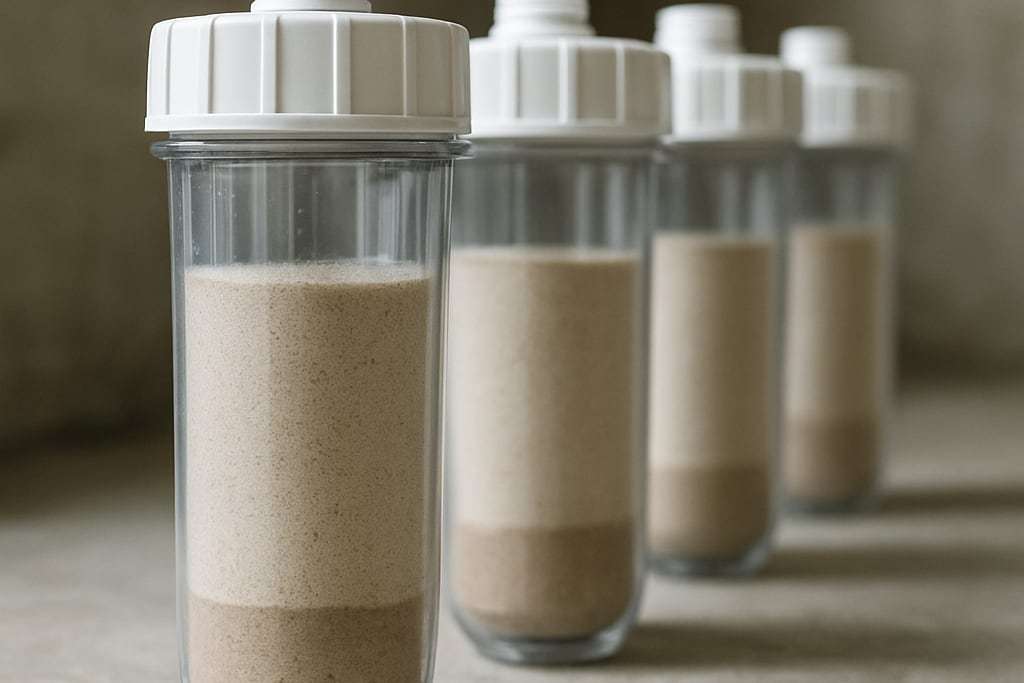
A sediment filter removes sand, silt, rust particles and other solid grit from well water before the water reaches carbon, UV or softening equipment. The SpringWell and iSpring whole-house kits use a 5-micron cartridge, and a lower micron number catches finer particles. A sediment filter does not remove dissolved iron, does not treat bacteria, and does not soften water, so test the well first and choose the rest of the system to match. For a sandy well, the reusable Frizzlife JB40-100 spin-down filter at $69.99 is a simple first stage.
A sediment filter is the simplest part of a well system, and it is often the first. It catches the solid particles that a well can carry, such as sand, silt and rust flakes, so that the carbon, UV or softening equipment behind it can do its job. Pick the micron rating that the rest of your equipment needs, put the cartridge at the entry point, and change it on a set schedule. A sediment filter is a protection step. It does not treat dissolved minerals or germs.
This guide draws on university extension material and manufacturer pages. The well water filter guide shows where a sediment stage fits among the other picks.
What a micron rating means
A micron is one millionth of a meter, and a micron rating is the particle size a filter is designed to catch. A lower number means a finer filter. The rating tells you what the cartridge stops, but it does not tell you how much water it passes, so read the flow rating separately.
Here are the ratings you will see on the products in this guide:
- 5 microns on the whole-house cartridges from SpringWell’s CF line and iSpring’s Big Blue sediment stage. The SpringWell CF and iSpring kits in this guide both use 5-micron cartridges.
- 40 or 100 microns on the spin-down pre-filters from Frizzlife, sold as the JB40-100 and JG40-100. These are sediment-only pre-filters that catch coarser grit, with no chemical treatment.
- 5 microns on the optional sediment canister that SpringWell offers ahead of its UV unit, listed at +$83.23.
Penn State and UGA both describe sediment filters as the step that protects carbon. The micron figures above come from the brands’ own pages, so read them as examples rather than a standard.
Where it goes in the system
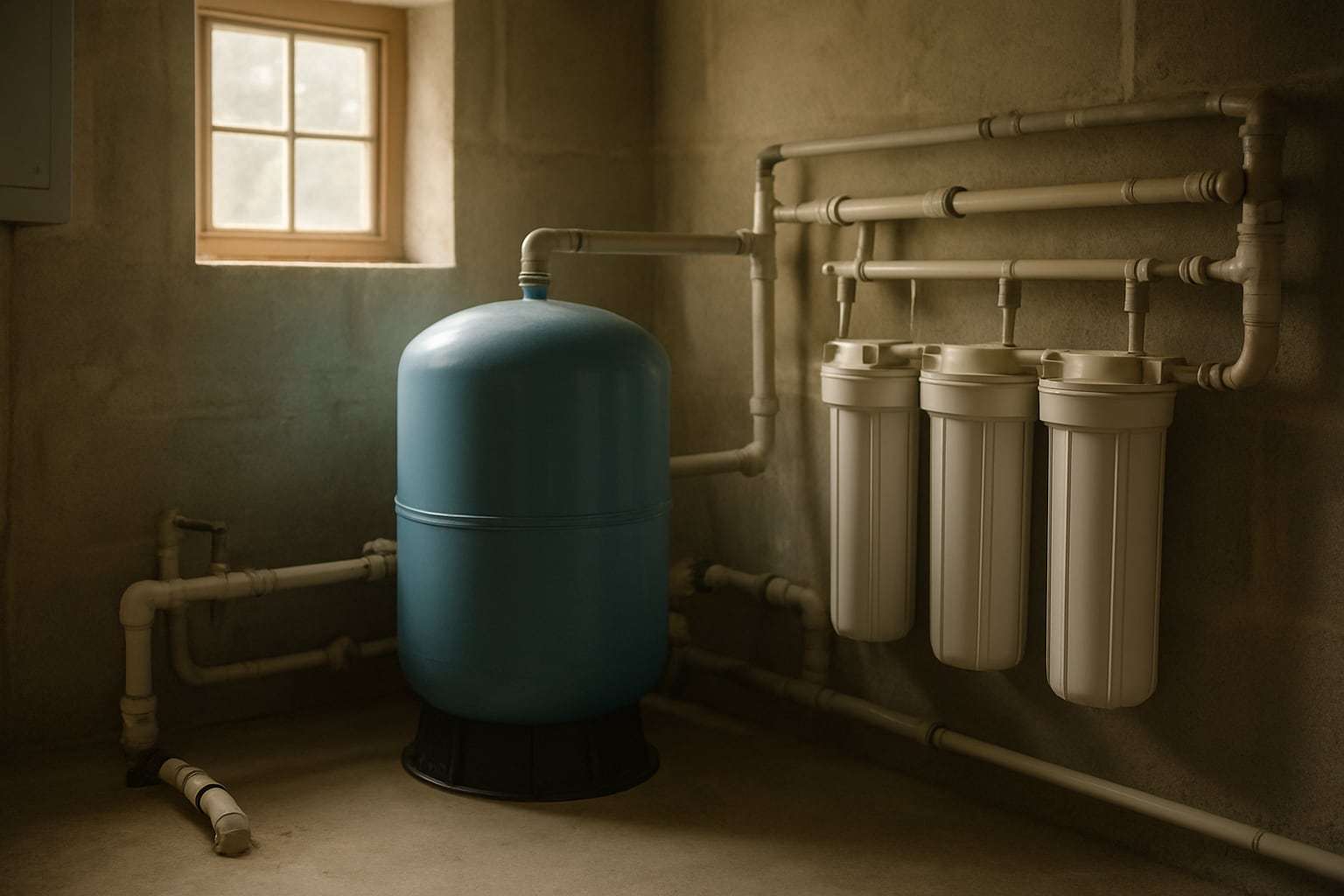
Put the sediment filter first. UGA Extension advises a sediment filter at the point of entry, ahead of carbon, so that particles do not load the carbon media. Then place the rest of the equipment in the order the maker’s manual gives.
A typical order looks like this, with the exact layout set by the equipment you buy:
- Sediment filter at the entry point.
- Iron or oxidizing treatment, if the water test calls for it. Oxidized, reddish iron must come out before a softener, since it clogs the resin.
- Softener, if you have hardness to remove.
- UV, which comes after the sediment and iron steps.
Some whole-house units, such as the SpringWell CF, put the 5-micron sediment filter after the media tank rather than ahead of it, so follow the unit’s own manual. A licensed plumber decides the final spot on the line, and local plumbing code applies.
Change intervals and flow
Sediment cartridges wear out by catching material, so they need changing on a schedule. These are the brands’ own listings.
| Product | Cartridge interval listed | Flow listed |
|---|---|---|
| iSpring WGB32BM (well or city, modest iron) | Replace every 6 to 12 months; stages 1 and 2 rated for 100,000 gallons | 15 GPM peak |
| Frizzlife JB40-100 / JG40-100 spin-down | Not listed; $69.99 and $79.99 | JG40-100 listed at 20 GPM |
| SpringWell UV, optional 5-micron canister | Not listed; +$83.23 | UV unit up to 15 GPM |
For comparison, these are city-water filters, shown only to give you a feel for typical intervals:
| City-water filter | Pre-filter interval listed | Flow listed |
|---|---|---|
| SpringWell CF whole-house filter | Every 6 to 9 months | CF1 9, CF4 12, CF+ 20 GPM |
| Aquasana Rhino | Every 2 months (standard) or 6 months (low-maintenance option) | 7.0 GPM rated, 14.6 peak |
| US Water Systems Magna | Sediment and carbon every 6 to 12 months | Up to 15 GPM |
The shorter the interval, the more often you pay for cartridges. Frizzlife does not list a change interval for its spin-down filters, so ask the seller before you buy.
Flow is the other limit. A clogged cartridge restricts flow, so a drop in flow at the tap is the first signal to check the sediment stage. Keep a note of the date each cartridge goes in, so you can judge the interval for your own water rather than relying on the brand’s number alone. Ask the seller for the pressure drop across a clean cartridge and a loaded one.
What a sediment filter does not do
Sediment filters catch particles. They do not remove dissolved iron, which is clear when drawn and only turns solid after it meets air or oxidizer. That kind of iron needs an oxidizing filter, an air-injection system, or a chemical step before filtration. The same is true of hardness, which is dissolved calcium and magnesium and needs a softener or other treatment. A sediment filter also does not treat bacteria. For a bacteria result, see the UV for well water guide.
Who needs one and who can skip it
A sediment stage is worth having in front of any carbon, UV or softening equipment, because carbon, UV and softening equipment all work best on clean water, and turbid water can clog softener resin. A well with a clear, low-sediment test result and no downstream equipment may not need a separate sediment filter at all.
If your water is cloudy, gritty or leaves a rust-colored residue in the sink or tub, a sediment step is a sensible first purchase. If your problem is smell, taste or staining from dissolved minerals, a sediment filter alone will not fix it, so test before you buy.
Mistakes to avoid
- Choosing by the smallest number. A finer filter clogs faster, which can lower flow.
- Skipping the cartridge change. A loaded cartridge stops protecting the stages behind it.
- Expecting it to treat iron or bacteria. It does neither on its own.
- Ignoring the flow rating. Check peak use, not the average, against the rating.
- Buying a pre-filter that does not match the maker’s list. Carbon, UV and iron units state their own pre-filter requirements.
Next steps
If the sediment step is part of a bigger plan, the best water filter for well water guide shows how it fits each well problem. Read the UV for well water page to see why UV needs the sediment stage. For installation, the installing a whole-house filter overview shows where the sediment stage sits on the main line and when a plumber should be called.
Frequently asked questions
What micron rating should a well sediment filter have?
The SpringWell CF and iSpring whole-house kits use 5-micron cartridges, and the Frizzlife spin-down pre-filters are rated at 40 or 100 microns. A lower number catches finer particles but clogs sooner. Use the rating the maker of your carbon, iron or UV equipment asks for, because those units list their own pre-filter needs.
How often should I change a sediment filter?
iSpring lists the WGB32BM cartridges every 6 to 12 months. For comparison, SpringWell lists its CF city-water sediment pre-filter every 6 to 9 months, and Aquasana's Rhino every 2 months (standard) or 6 months (low-maintenance option). Change the cartridge on schedule, and change it sooner if the flow drops noticeably.
Does a sediment filter remove iron or bacteria?
It removes particles, including rust that has already turned solid. It does not remove clear, dissolved iron, which passes through to the next stage. It is not a bacteria treatment either. University of Georgia Extension says carbon alone does not remove bacteria, so a bacteria result calls for a disinfection step such as UV, chosen after a lab test.
Where does the sediment filter go?
UGA Extension advises putting a sediment filter at the point of entry, ahead of carbon, to protect the carbon media. The exact spot on your line is set by the unit's manual and confirmed by a licensed plumber, and local plumbing code applies.