The short answer
A whole-house water filter is installed on the main line where water enters the home, with a bypass so the filter can be isolated for service. This page gives an overview of the parts to match, the order of the work and the checks that follow. Local plumbing code and a licensed plumber decide where the filter can go and whether a permit is needed, so treat this as planning guidance, not a set of steps to do the work yourself.
- Water inCity main or well pressure tank.
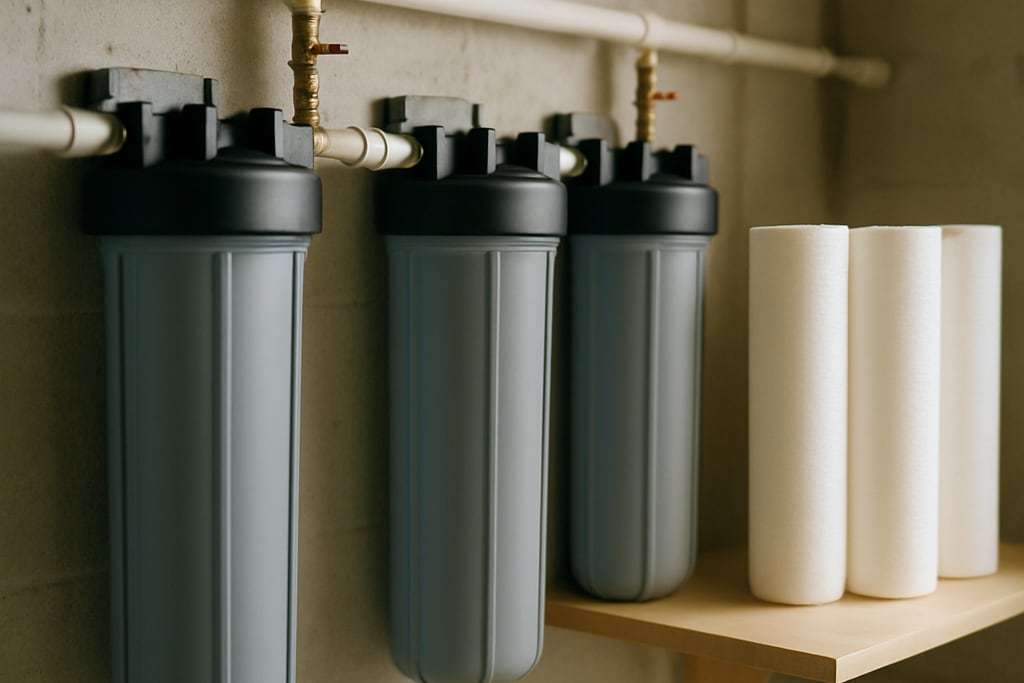
- Sediment filterCatches sand and particles first, so later stages don't clog.
- CarbonReduces chlorine, taste and odor.
- SoftenerRemoves hardness (only if you need it).
- UV (wells)Disinfects last: it needs clear, low-iron, low-hardness water to work.
Order follows the multi-stage example in Nebraska Extension G1714. Your equipment manuals and local plumbing code have the final say, and UV makers set their own pre-treatment limits.
Installing a whole-house filter means cutting into the water line that feeds the entire house, so the job is bigger than swapping a faucet filter. The unit has to fit the pipe, sit where the maker and local code allow, and be bypassed so the house keeps water while it is serviced. The steps below are an overview of how the work usually goes. Local plumbing code and a licensed plumber decide the exact spot and method, and a plumber should check any cut, connection or permit.
This guide draws on product pages, cost guides and extension material. Size the filter first with the flow rate calculator.
Check the spot before you buy the unit
Start with three checks: the water test, the pressure and temperature rating, and the room. The water test tells you whether the filter type is right, which the whole house water filter guide explains by problem. The pressure and temperature ratings tell you whether the spot works. SpringWell’s CF1 is rated for 25 to 80 PSI and 36 to 120 F, and Aquasana’s Rhino for 40 to 90 F and up to 100 PSI. A location that can drop below the unit’s minimum temperature, such as 36 F for the CF1 or 40 F for the Rhino, needs a different spot or added protection that the maker approves.
Measure the pipe as well. The CF1 has 1-inch connections, and the Rhino fits 3/4-inch or 1-inch mains. A mismatch means fittings or a different unit, which adds cost before the work starts.
Where it goes on the main line
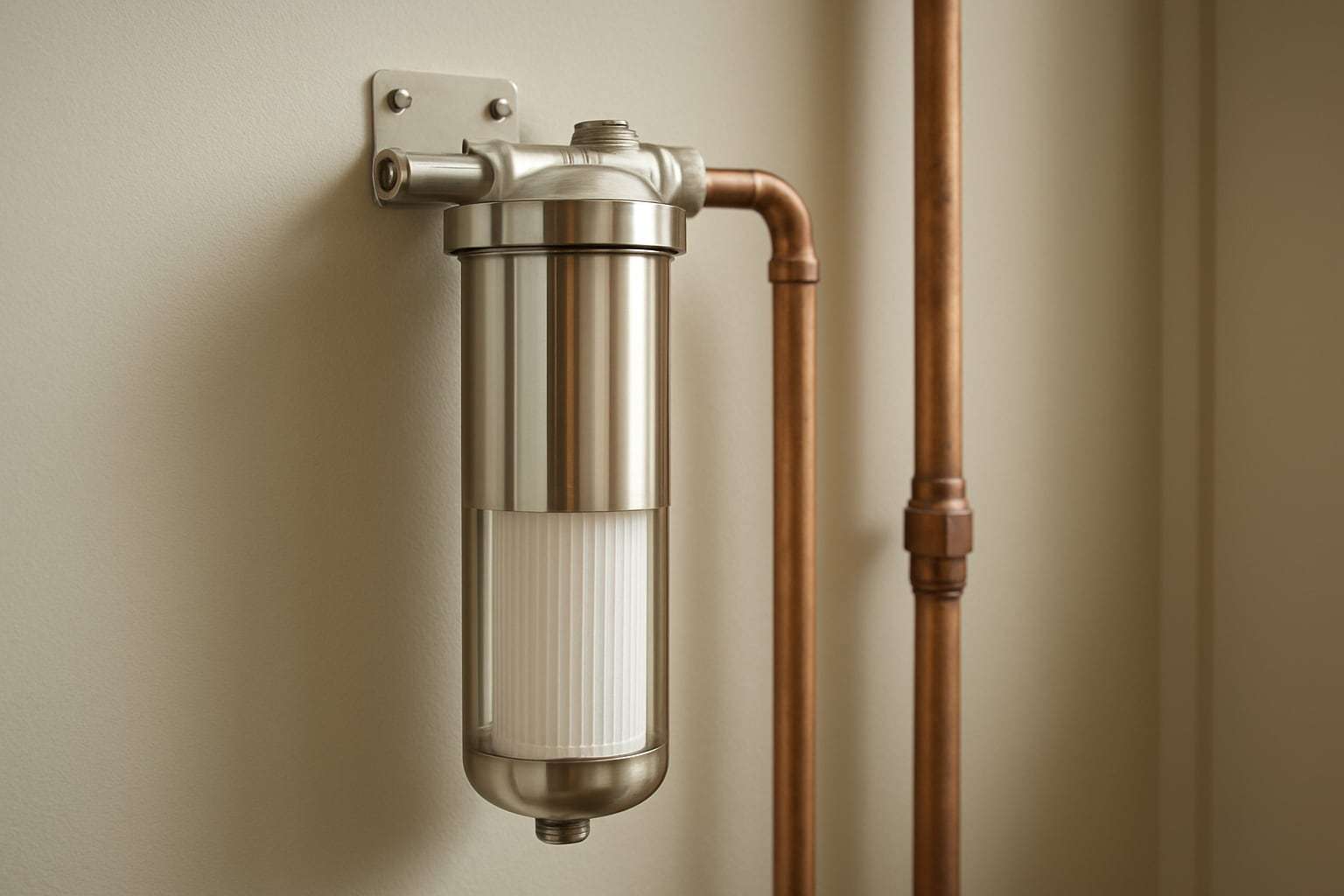
Water enters the house at the main line, and the filter is placed on that line so that all the water the house uses passes through it. Such placement is called point-of-entry treatment, which is the whole-house type. A point-of-use unit sits at one tap instead.
Two rules shape the layout. First, sediment comes ahead of carbon, because UGA Extension advises protecting the carbon with a sediment stage. Second, if you will add a softener, the filter that handles iron goes ahead of it, because oxidized iron clogs softener resin. The unit’s manual shows the flow direction, and the arrows on the housing should match it.
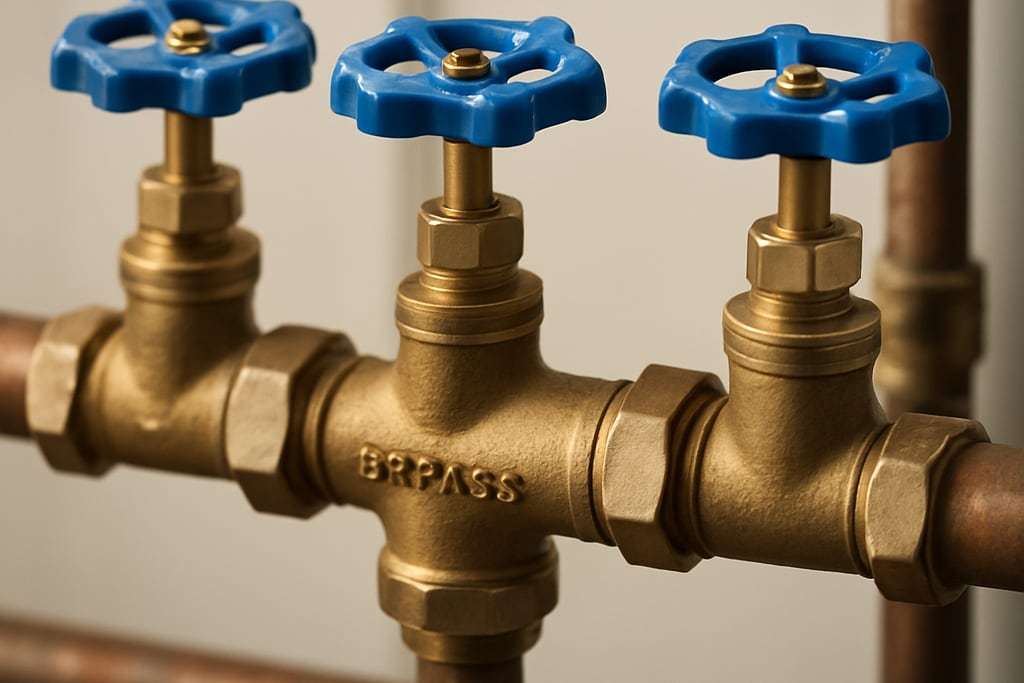
The bypass loop
A bypass is a set of valves and a short pipe that lets water skip the filter. Set up correctly, it lets the house keep water while the cartridge is changed or the unit is serviced. Without one, the whole house loses water each time the filter comes out. A bypass is also how you run untreated water to the house while a unit is out of service, which should be a deliberate choice.
It is usually easiest to add the bypass when the unit goes in, because adding it later means opening the line again. The water softener bypass valve page covers the same idea for softeners.
The overview of the work
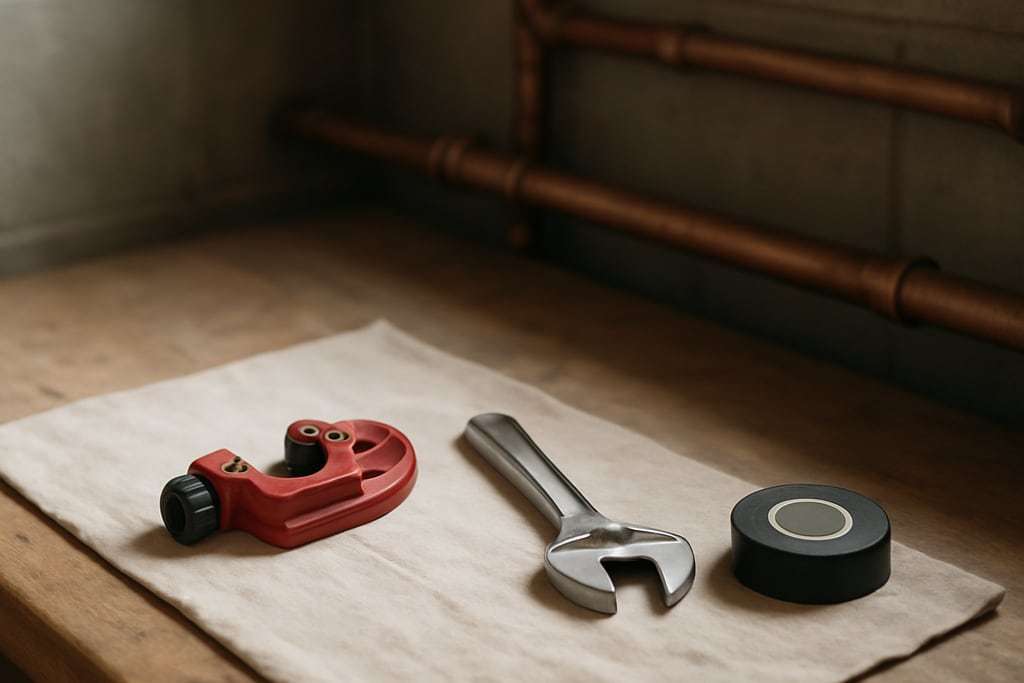
The steps below describe the order a plumber usually follows. They are not a do-it-yourself guide.
- Shut off the water supply to the house and drain the line at a low point.
- Cut the pipe where the filter will sit, and fit the connections that match the unit.
- Mount the housing, set the bypass, and install the cartridges as the manual shows.
- Restore the water slowly, so that pressure rises gradually and any air clears.
- Check every joint for leaks, then confirm pressure and flow at a tap.
- Run the unit per the manual, and note the date of the first cartridge change.
Each step carries risk. A leak inside a wall or floor is the costly outcome to avoid, so a licensed plumber should carry out steps 1 through 5 unless the local rules allow otherwise.
Checklist: ratings, parts and checks
- Ratings. Compare the unit’s pressure range, temperature range and connection size with your house before you order. If line pressure runs above the rating, fix that first.
- Parts. Most installs need the filter housing and cartridges, a bypass (built into the kit or added as a separate valve set; Aquasana’s add-on is listed at $248), and fittings and pipe that match the existing line. A plumber adds anything else local code requires.
- After the water is back on. Check every joint, including the bypass valves and the drain. Confirm the line pressure falls inside the unit’s rating (25 to 80 PSI for SpringWell’s CF1), and ask the plumber to write down the readings. Have the installer show you how to switch between service and bypass before they leave.
When to call a licensed plumber
Call a licensed plumber whenever the job cuts into the main line, uses different pipe material, or needs a permit. Call one, too, if the house has no shutoff you can reach, if the pressure is outside the unit’s rating, or if you are adding a softener at the same time. Local code decides the rest, so check with your building department before you start.
Installation labor for softeners runs from $150 to $1,000 in the cost sources, and adding plumbing for a softener loop is listed at $200 to $800. Those are softener figures, so read them as rough estimates for a filter. Compare the whole house water filter cost breakdown before you ask for quotes.
Mistakes to avoid
- Installing without a bypass. Every future service then takes the whole house off water.
- Ignoring the pressure and temperature ratings. Check them against the spot, not the brochure.
- Buying the wrong connection size. Check the pipe before ordering fittings.
- Skipping the leak check. Recheck the joints after the first day of use.
- Treating a warranty as a sure thing. SpringWell states that installed systems are generally not returnable unless defective.
Next steps
Once you know the unit and the spot, check the full price of the job with the whole house water filter cost guide. For a softener bypass, the water softener bypass valve page explains how the bypass works in that setting. The best whole house water filter guide covers the units themselves.
Frequently asked questions
Can I install a whole-house water filter myself?
Some homeowners do the work, but local code decides whether a licensed plumber must do it. The warranty may also depend on the install. SpringWell says installed systems are generally not returnable unless defective, and its warranty can be void if maintenance or water conditions are not met. If you are not sure, hire a licensed plumber.
What does the bypass do?
A bypass lets you shut off the filter and keep water moving to the house while you service the cartridge or the unit. Aquasana lists its bypass as a $248 add-on for the Rhino. SpringWell pre-adds a bypass valve to some softeners at $58.79, so ask whether one is already included before you buy.
How much does installation cost?
Published cost guides give installation labor mainly for water softeners, not filters: $150 to $1,000, with most jobs at $500 to $700, according to This Old House. Bob Vila puts running new pipe at about $0.50 to $1.00 per linear foot. Get a written quote for your own pipe work, because pipe work drives most of the price.
What pressure and temperature range should the filter handle?
Check the unit's ratings before you pick a spot. SpringWell's CF1 lists 25 to 80 PSI and 36 to 120 F, and Aquasana's Rhino lists 40 to 90 F and up to 100 PSI. A location where water can freeze, or where line pressure runs above the rating, needs a fix before the filter goes in.