The short answer
A water softener bypass valve sends water around the softener, so untreated water reaches the taps. People use it to keep water flowing while the softener is serviced, or to avoid the sodium that softening adds at the taps. Follow the softener's manual, and have a licensed plumber add or check a bypass in line with local code.
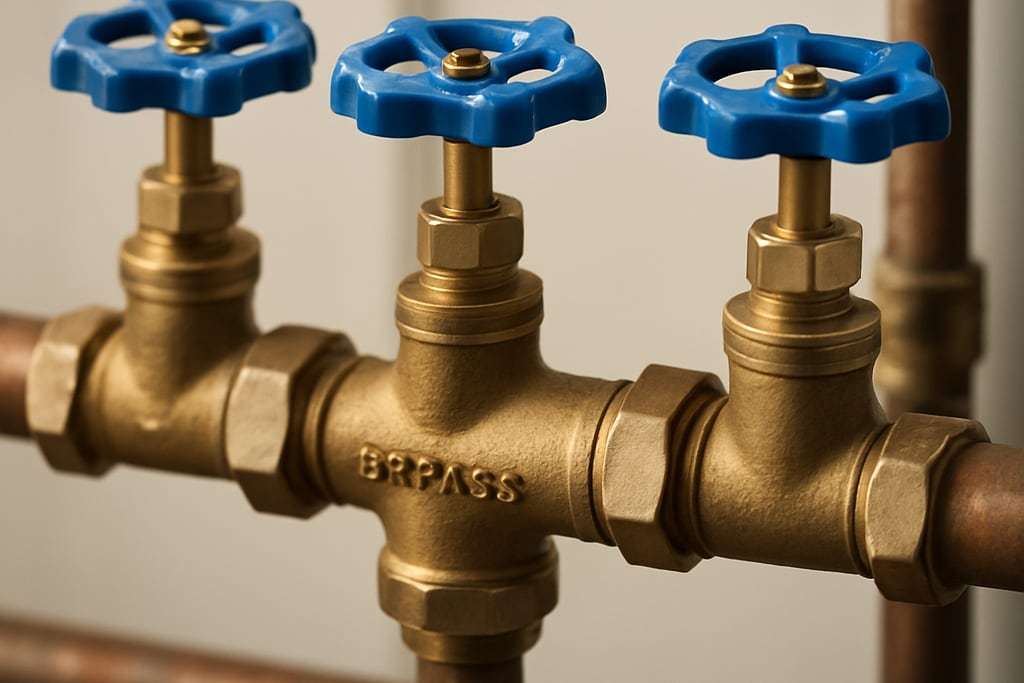
A softener has two states: treating water, and bypassing it. In the bypass position, a valve sends incoming water around the resin tank, so the water reaching the house is untreated. That is useful when you need the untreated water for a particular job or while the softener is being serviced, and it is a risk if you forget to switch back. This page explains what the valve does, why people use it, the trade-offs and the costs, so you know what to ask the installer and what to check on your own unit.
This guide is based on extension publications, a valve data sheet and manufacturer pages, not on our own testing of any softener. The best water softener guide lists models with warranties of 5 years or more.
What the bypass valve does
A softener removes calcium and magnesium by passing water through resin beads loaded with sodium. When the beads are full, a brine flush recharges them. The bypass valve sits in the plumbing so that the flow can skip that resin entirely. Water in the bypass position is not softened, and it carries whatever the well or city supply carries, including hardness, and iron if it is present.
Penn State and Nebraska Extension describe regeneration as the brine flush that recharges the resin, a separate step from treating water. A bypass changes only the water path. It is not a cleaning step, and it does not replace the regeneration cycle.
Common reasons to bypass
Two reasons come up most often.
- Unsoftened water for drinking and cooking. Softening adds sodium, so some households prefer unsoftened water for their kitchen. NDSU notes that leaving one tap unsoftened avoids the added sodium for drinking and cooking. A whole-house bypass sends unsoftened water to every tap, so a single-tap option may suit better.
- Servicing the softener. When the valve, the controller or the brine tank needs work, a bypass lets the house keep water. Cleaning the brine tank and checking the valve are typical jobs.
Whichever reason applies, the switch back to service is part of the job. A softener left in bypass is a softener that does nothing, and the hard water reaches every tap.
The sodium trade-off
Sodium is the one reason people often ask about. The added sodium is about 8 mg/L for each grain per gallon of hardness removed. A water at 10 gpg gains about 80 mg/L. Potassium chloride can replace sodium chloride for regeneration, but it costs more, binds more strongly to the resin, and needs more salt per cycle. The NDSU page puts potassium salt at up to $25 per 40-pound bag, against $5 to $10 for sodium salt.
The bypass is the simplest way to avoid the sodium on one or more taps, but it is not the only way. Ask a doctor first if you need to limit sodium or potassium for a medical reason.
Valve designs and your manual
Bypass valves come in different designs, and the position and switching order are shown in your softener’s manual. Ask the installer to label service and bypass on the valve itself.
The softener’s control valve matters too. Pentair’s data sheet for the Fleck 5600 SXT covers the valve alone, and its flow figures are not a rating for a complete softener. Check whether your kit includes a bypass before you buy.
Setting it right
Follow the manual step by step, since the switching order depends on the design. In general, a plumber or a careful owner sets the bypass, checks that water still reaches the taps, does the job, then returns the valve to service and checks again. Note the position before you start so you can restore it.
Two habits stop most mistakes. Write the date you bypassed the softener on the tank or near the valve, and set a reminder to switch back. If you are adding a bypass to an existing softener, a licensed plumber is the usual choice, and local code decides what the connection needs. The easiest time to add one is when the softener is installed and the lines are already open. Ask the installer to mark the positions in plain words such as “service” and “bypass” so anyone in the house can read them.
Questions to ask the installer
- Is there a bypass on this softener, and is it in the quote? SpringWell, for example, lists an optional bypass valve at $58.79, so it is worth confirming whether it is included.
- Which positions mean service and which mean bypass? Have them labeled on the valve and match the labels to the manual.
- What do I do after a service visit? Ask them to show you the steps to return the valve to service and check the water afterward.
- Can one tap stay unsoftened? If sodium is your concern, ask about leaving the kitchen cold tap on unsoftened water instead of bypassing the whole house.
- Does the softener’s iron rating match my water? A bypass sends untreated iron to every tap, so know the rated limit before you plan a long bypass.
Mistakes to avoid
- Forgetting to switch back. Hard water reaches every tap, and the resin sits unused.
- Bypassing with iron present. Untreated iron reaches the taps, and oxidized iron is what clogs softener resin. Check the unit’s rated iron limit before any long bypass.
- Assuming a bypass is a fix. It changes the water path and nothing else.
- Buying a softener without a bypass. Adding one later is a plumbing job, so decide before installation.
- Ignoring the sodium. A bypass on one tap is often the right answer for drinking water.
Costs
SpringWell lists an optional bypass valve, $58.79, for its softeners. Aquasana lists a bypass for its Rhino filter at $248. For a softener bypass that needs new pipe, This Old House puts the added plumbing for a softener loop at $200 to $800, and installation labor for softeners at $150 to $1,000. These figures change, so check them before you order.
Next steps
For the softener itself, the Fleck 5600SXT review covers that valve in detail. If the bypass is for cleaning, the how to clean a water softener guide explains the job. For a whole-house filter that needs a bypass too, see the installing a whole-house filter overview.
Frequently asked questions
Will bypassing my softener hurt my plumbing?
Hardness is what leaves scale and spots, so a long stretch on unsoftened water means more deposits on fixtures and in water heaters. Return the softener to service once the reason for the bypass is over, and check the valve position after every switch. Bypassing for a short job is a different matter from leaving it bypassed for weeks.
How much sodium does a softener add?
The sodium added is roughly 8 mg/L for each grain per gallon of hardness removed. A water at 10 gpg therefore gains about 80 mg/L of sodium. People who need to limit sodium should ask a doctor first, and NDSU Extension notes that a kitchen tap can be left unsoftened for drinking and cooking.
Can I use potassium chloride to avoid sodium?
Potassium chloride can replace sodium chloride for regeneration when sodium must be restricted. It costs more, reduces exchange efficiency, and needs more salt per cycle. Expect to pay more for it. People with kidney disease or on a potassium-restricted diet should ask a doctor first.
What does a bypass valve cost?
SpringWell lists an optional bypass valve, $58.79, for its salt-based softeners. Installed plumbing for a softener loop is listed at $200 to $800 by This Old House, and softener installation labor at $150 to $1,000. Ask the installer whether the price includes the bypass and any new plumbing.