The short answer
Cleaning a water softener means keeping the brine tank clear, using the salt the maker names, and watching for signs that the resin is fouled. Brine tank care and salt checks are routine jobs that the manual describes. Resin fouling from iron, bacteria or cloudy water usually needs a resin cleaner or a professional, and any plumbing work follows local code and a licensed plumber.
1. Service (most of the time)
- Hard water inCalcium and magnesium dissolved in the water.
- Resin tankResin beads hold on to calcium and magnesium and release sodium (or potassium) in exchange.
- Softened water outGoes to the house. It adds about 8 mg/L of sodium per grain of hardness removed.
2. Regeneration (every few days, or by meter)
- Brine from the salt tankSalty water washes back through the resin.
- Minerals releasedThe trapped calcium and magnesium let go of the beads.
- Flushed to the drainAbout 50 gallons per regeneration (Nebraska and Penn State extension figures).
Sources: University of Nebraska–Lincoln Extension G1491; Penn State Extension, "Water Softening".
A water softener needs two kinds of care. The brine tank, which holds the salt, needs to be kept clear and checked each time you add salt. The resin, which does the actual softening, can be fouled by iron, bacteria or cloudy water, and cleaning it is a different and often professional job. This guide gives a short overview of both and says when to stop and call someone. Your manual has the exact steps for your model, and where it differs from this page, the manual wins.
What you are cleaning
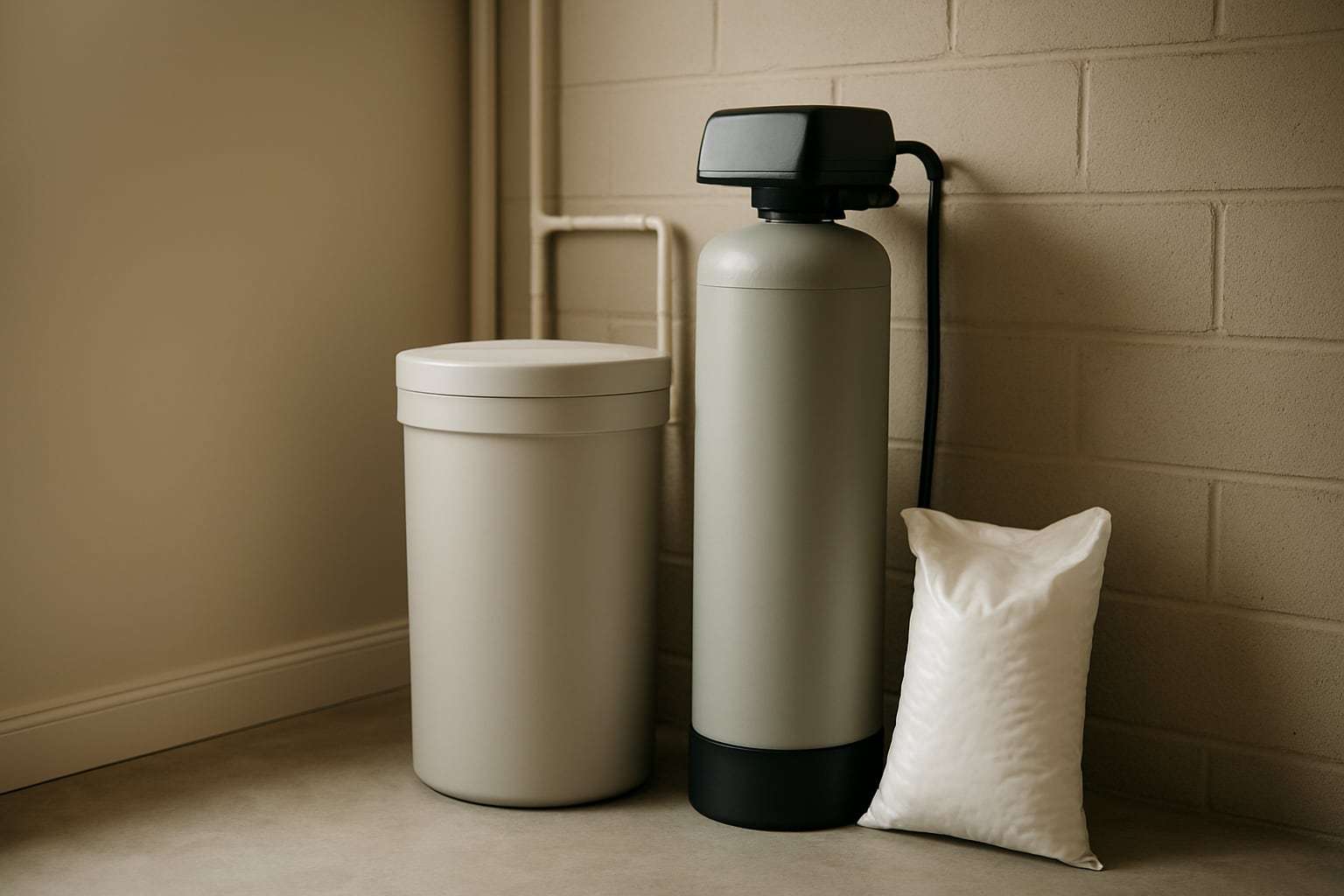
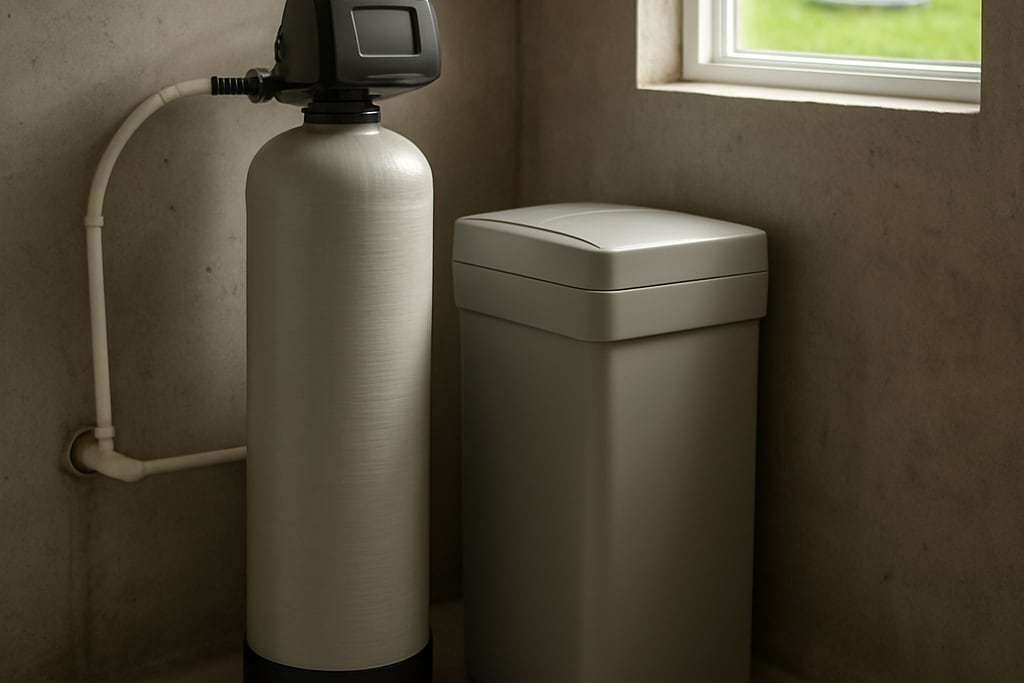
The brine tank holds salt and makes the brine that recharges the resin. Penn State and NDSU Extension both say to clean it periodically, because debris and salt residue build up over time. Neither gives a fixed interval.
The resin is the bed of beads that exchanges sodium for calcium and magnesium. Penn State and NDSU list the usual causes of fouling: turbid (cloudy) water, bacteria and fungi, and iron. If iron is building up, the unit needs backwashing more often. A softener whose resin is fouled may keep running while hardness leaks through, which is why a water test matters.
Before you start: warranty, bypass and safety
Check the warranty first. SpringWell’s warranty, for example, is void if water or maintenance conditions are not met. Read the warranty and the manual, keep a note of what you did and when, and ask the maker before any work that might count as outside the listed care.
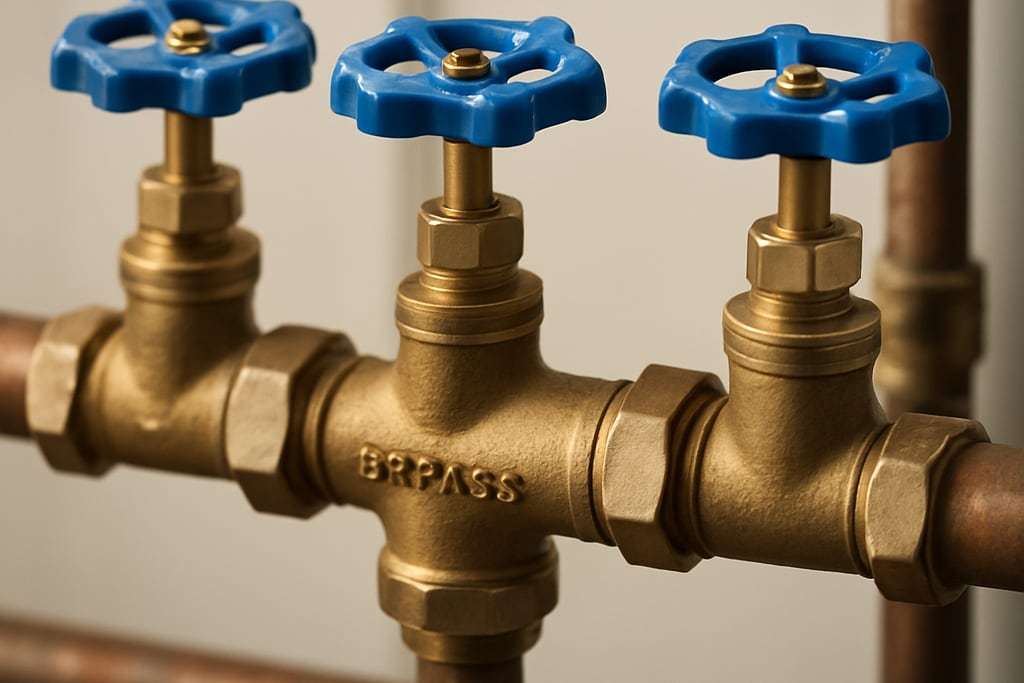
Use the bypass if you have one. A bypass valve lets the house keep running while the softener is out of line. SpringWell lists a bypass valve as a $58.79 add-on for its softener. Put the unit on bypass as the manual describes before you work on the brine tank. See our bypass valve guide for what it does.
Mind the salt bags. A standard bag of sodium chloride weighs 40 pounds, so ask for help if you cannot lift one safely.
Use only products the maker names. Do not add bleach or other chemicals unless the manual or a professional says so, and never mix cleaners. Many softeners have electronic heads, so follow the manual before you disconnect power. Our best water softener guide lists models with 5-year or longer warranties if you are replacing a worn unit.
Plumbing work is a code matter. Local code and a licensed plumber decide any connection, drain or backflow work. Call a plumber before you disconnect pipes.
Overview of a brine tank clean
- Read the manual for your model. Note the salt type it names and any cleaning product it approves.
- Put the unit on bypass if it has one, and handle power as the manual says.
- Clean the brine tank following the manual’s steps.
- Refill with the salt the manual names. Sodium chloride is the usual choice; potassium chloride costs more.
- Put the unit back in service as the manual describes, then test the softened water for hardness. If hardness is still high, check the signs below.
- Write down the date, the salt used and what you did.
Signs the resin needs more than a brine clean
A clean brine tank will not fix every problem. Call a professional, or test the water, if you see any of these:
- Hardness comes back. Use the hardness converter to read a new test. Hardness leaking through suggests the resin is spent or fouled.
- Orange or rust-colored water after regeneration. Iron is the usual cause. The unit needs its iron limit checked, and dissolved iron above the rated limit reduces effectiveness, according to Nebraska Extension.
- Rotten-egg smell. That points to sulfur, and a softener is not the treatment for it. The sulfur smell guide explains the options.
- Cloudy or gritty water. Turbid water can clog resin. Add a sediment filter ahead of the softener, as Penn State describes.
When to call a professional
Resin cleaning and iron fouling are the usual reasons to call a pro. Typical costs from published cost guides:
| Service | Typical figure | Source |
|---|---|---|
| Resin tank cleaning | About $100 to $200 a year | This Old House |
| Professional servicing | About $150 to $300 a year | This Old House |
| Annual maintenance | About $100 to $300 | Bob Vila |
Call a professional when hardness returns after a test, when the water shows iron or sulfur, when bacteria may be present, when a valve or electronic part fails, or when your warranty asks for professional service. Water with bacteria should be tested by a lab before any treatment is chosen; the well water testing guide explains what to ask for.
Salt: which kind to use
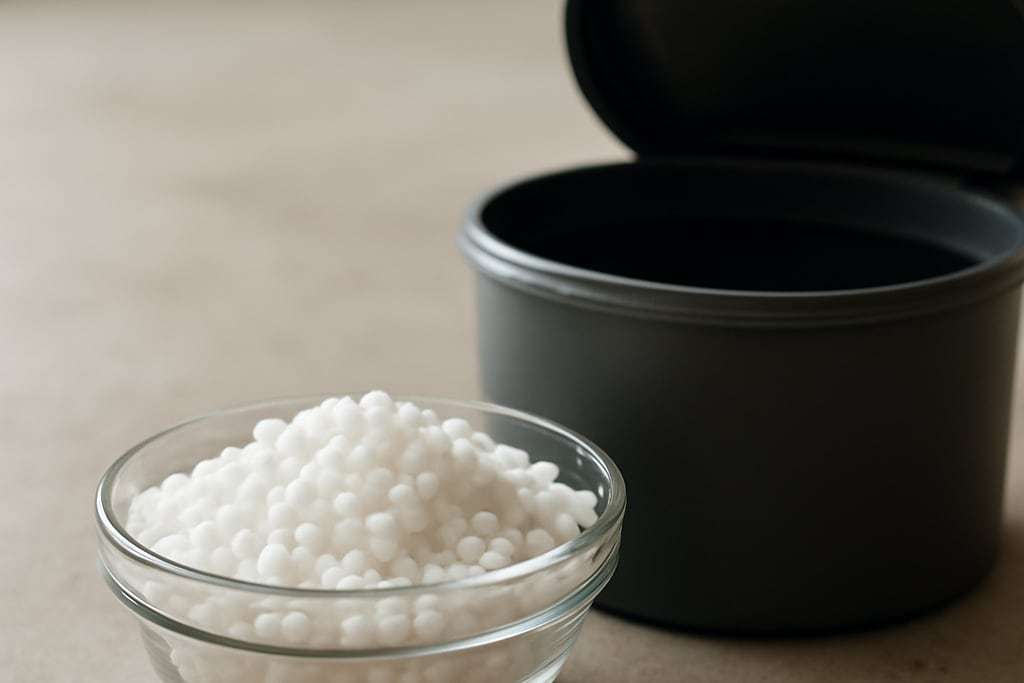
Sodium chloride is the common choice. NDSU Extension puts it at $5 to $10 per 40-pound bag. Potassium chloride is the option when sodium must be restricted, but the costs are higher:
| Salt | Typical price | What the extension guides say |
|---|---|---|
| Sodium chloride | $5 to $10 per 40-pound bag | The usual choice; adds sodium to the softened water |
| Potassium chloride | Up to $25 per bag (NDSU) | Costs more, binds more strongly to the resin, uses about 10 percent more per backwash, and reduces exchange efficiency |
Ask your doctor before you choose potassium chloride for a health reason. The potassium chloride comparison goes through the cost and efficiency trade-offs in more detail.
How often to clean
The Penn State and NDSU guides say to clean the brine tank periodically and give no fixed schedule. A workable habit is to check the tank every time you add salt, and to follow the schedule in your manual. If the water needs backwashing more often because of iron, expect to clean more often too.
Water and septic use
Each regeneration uses about 50 gallons of water, per Nebraska and Penn State Extension. Penn State warns that this can load a septic system, so a home on a septic tank should plan its regeneration times with that in mind. Manufacturer data for one model, the Matrixx 1.0 cubic-foot softener, lists 33, 59 and 67 gallons per regeneration depending on the salt setting, which shows how much the setting matters. The septic system softener guide goes through the research on brine and septic tanks.
Who should leave it to a pro
- Anyone with iron, sulfur or bacteria in the water. The cleaning is the easy part. Finding and treating the cause is the job for a pro and a lab test.
- Anyone doing pipe or drain work. Local code and a licensed plumber decide that.
- Anyone whose warranty requires professional service. Read it before you start.
- Anyone who cannot safely lift 40-pound bags. Ask for help or a service visit.
Mistakes to avoid
- Working on the unit without bypassing it or handling power as the manual says.
- Using a cleaner the maker does not name.
- Skipping the test after cleaning. A clean tank does not prove the water is soft.
- Assuming a clean brine tank fixes iron. Iron is a resin and water problem.
- Ignoring the warranty. A missed maintenance step can void cover.
Final checklist
Clean the brine tank when the manual says and at least when you see debris. Check the salt each time you refill. Test the softened water after cleaning. Call a pro for resin fouling, iron, sulfur or bacteria. Keep notes, because a written record helps with warranty claims and with any future test.
Frequently asked questions
How often should I clean a water softener?
The Penn State and NDSU Extension guides say to clean the brine tank periodically but give no fixed interval. Check the tank each time you add salt, and follow the schedule in your manual. Iron in the water means more frequent backwashing, so water with iron needs closer attention.
Can I use bleach to clean a water softener?
Not unless the maker or a water treatment professional says so. Shock chlorination is effective against iron bacteria but only temporary, and repeated use can corrode well parts, according to a University of Nebraska water article. Test the water before and after any chemical treatment.
Can I clean the resin myself?
Penn State and NDSU Extension list cloudy water, bacteria, fungi and iron as the usual causes of fouled resin. Treating that is a job for a water treatment professional, and This Old House puts resin tank cleaning at about $100 to $200 a year. Use only the products and steps your manual names.
Can I use potassium chloride to save on salt?
Usually not for cost. Potassium chloride costs more per bag, NDSU Extension says it can cost up to $25 per 40-pound bag against $5 to $10 for sodium chloride, and it uses more salt per backwash. It is the option when sodium must be restricted, and if you have a medical reason to limit sodium or potassium, ask your doctor first.
How long does a water softener last?
This Old House says about 20 years with proper maintenance, and hard water can shorten that. Vendor blogs cite 10 to 15 years for resin, and 5 to 7 years where chlorine is high. Chlorine and iron both shorten resin life, so a test of the water is the first step if the unit wears out early.