The short answer
Potassium chloride (KCl) can recharge a water softener in place of sodium chloride, which is ordinary salt. Choose it when you must limit sodium in your water. It costs much more per bag, it uses more salt, and it can reduce exchange efficiency. Sodium chloride is cheaper and more efficient, and it adds about 8 mg/L of sodium for each grain per gallon of hardness removed. If you have a medical reason to limit sodium or potassium, ask your doctor first.
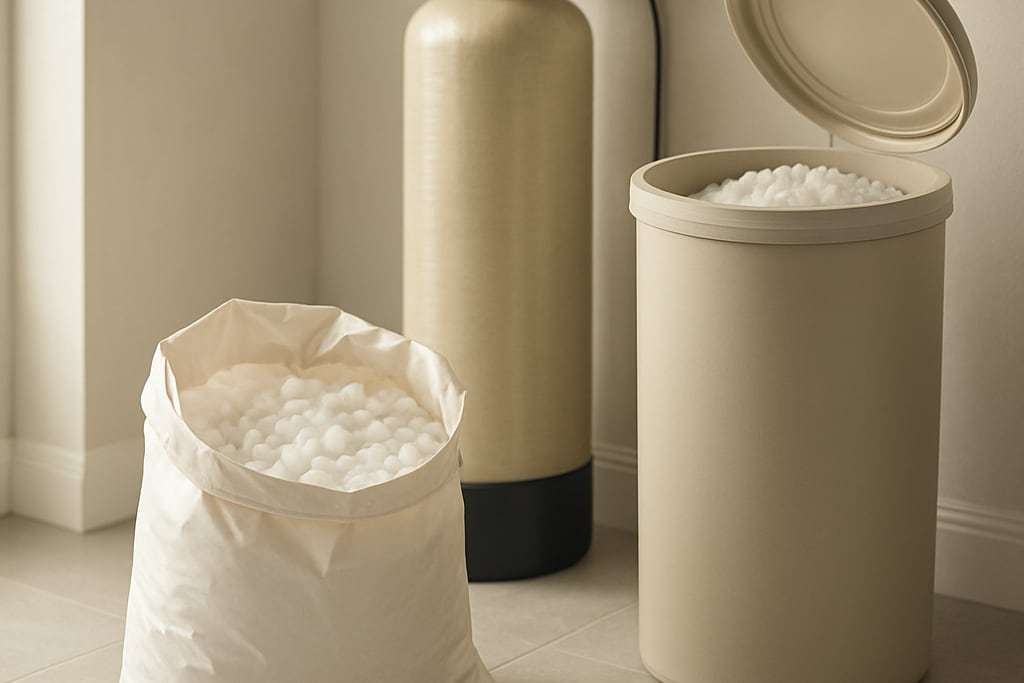
Potassium chloride can recharge a water softener in place of sodium chloride, the ordinary salt most people buy. The two do the same basic job. Each one flushes hardness down the drain and leaves its own mineral in the water. The real choice is between cost and sodium. Potassium chloride costs several times more per bag and uses more salt, but it avoids adding sodium to your water. This comparison uses extension guidance and published price ranges, not our own testing of any product. Prices change often.
What each salt does in the softener
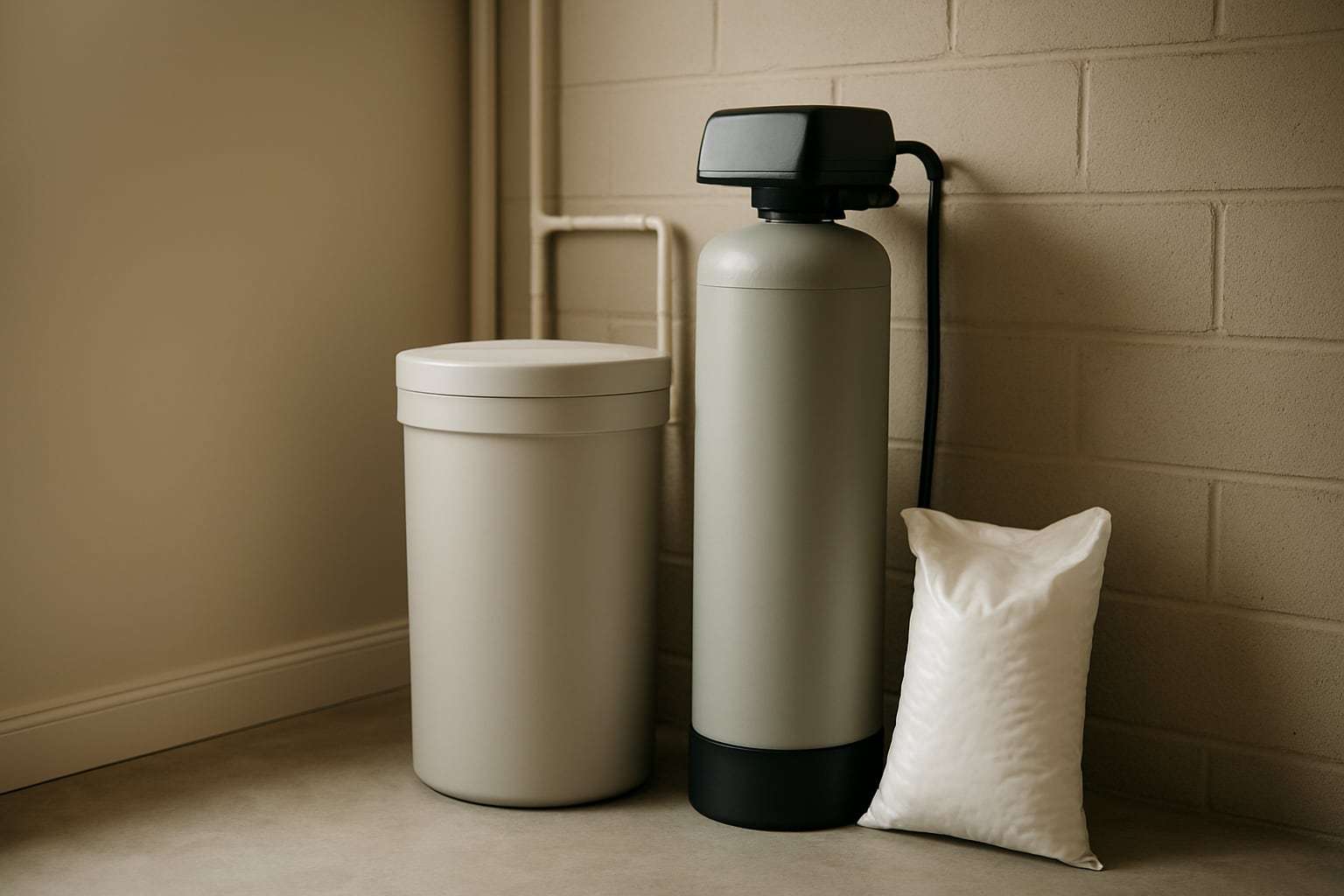
During regeneration, a brine made from the salt is flushed through the resin. The sodium, or potassium, replaces the calcium and magnesium that the resin has been holding. The hardness minerals then go to the drain, according to Nebraska Extension. Sodium chloride is the common default, and potassium chloride is the option to use when sodium must be restricted.
The differences show up in three places: the water you drink, the bag you buy and how well the resin performs over time.
The sodium question
A salt-based softener adds sodium to the water it treats. The rule of thumb from Nebraska Extension and NDSU is about 8 mg/L of sodium for each grain per gallon of hardness removed. The arithmetic is simple, and it is shown in the table below.
| Hardness removed | Approximate sodium added (sodium chloride) |
|---|---|
| 5 grains per gallon | About 40 mg/L |
| 10 grains per gallon | About 80 mg/L |
| 15 grains per gallon | About 120 mg/L |
These figures are estimates from the rule of thumb, not measurements of your water. A water test after installation gives the real number.
Potassium chloride replaces sodium with potassium in the same exchange, so the softened water carries potassium instead. Ask the maker or a lab for the potassium figure for your water.
If the goal is to limit sodium at one tap, NDSU suggests leaving that tap unsoftened. Drinking and cooking water are the usual choice for that tap. This avoids sodium at the point of use without changing the salt.
Cost per bag and per year
Price is where the two salts differ most. Potassium chloride costs several times more per bag, so check the price in your area.
| Item | Sodium chloride | Potassium chloride |
|---|---|---|
| Price per 40-lb bag | $5 to $10 (NDSU; This Old House) | Up to $25 (NDSU) |
| Salt used per regeneration | Baseline | More; NDSU says about 10% more per backflush |
| Yearly salt cost for a typical household | Roughly $50 to $150 (our estimate) | Several times that |
The yearly figure for sodium chloride is an estimate from the bag prices in the extension guides and the usage described in the water softener cost guide. The potassium figure follows from the bag price and the extra salt used.
Two other costs belong in the comparison. The first is the softener itself. Penn State puts softener hardware at about $500 to $1,500, and installed systems run higher, so the salt choice is a running cost on top of that purchase. The second is water: each regeneration uses about 50 gallons, according to Nebraska Extension and Penn State, and Penn State notes this can load a septic system with either salt. For the research on brine and septic tanks, see the septic system softener guide.
Efficiency and the resin
Nebraska Extension says potassium chloride binds more strongly to the resin than sodium does. That reduces exchange efficiency and means more salt is needed for each regeneration. The softener therefore works less efficiently on potassium, and you pay for the extra salt.
NSF/ANSI 44 covers water softeners regenerated with sodium chloride or potassium chloride, so the certification does not tell you which salt to use. Whichever you choose, the softener’s manual and warranty decide what is supported. Ask the maker in writing whether your model accepts potassium chloride before you buy.
Questions to ask the maker
Before you switch salts, ask the softener’s maker these questions in writing, and keep the answers with the manual:
- Does the softener’s warranty cover potassium chloride, or does it require sodium chloride?
- How much more salt should I set for each regeneration, and does that change the capacity shown on the spec sheet?
- Which resin does the unit use, and is it rated for potassium chloride?
- Does the maker give a sodium figure for the treated water, so I can add it to what my utility or lab reports?
The last question matters for a restricted diet. The total sodium in your drinking water is your utility’s figure plus the softener’s contribution, so ask for both numbers.
Who should pick which
Choose sodium chloride if sodium is not a concern for anyone in the house, you want the lower cost, and you want the most efficient exchange.
Choose potassium chloride if you have a medical reason to limit sodium, you accept the higher cost and salt use, and the softener’s maker accepts it. Ask your doctor first, especially if you have kidney disease or follow a potassium-restricted diet.
Consider an unsoftened tap if sodium only matters at one faucet. This may be cheaper than changing the salt for the whole house.
Consider a conditioner if you want to avoid salt altogether and you accept that hardness stays in the water. A conditioner adds no sodium, but it does not soften. The water softener vs water conditioner comparison explains the trade-off.
Mistakes to avoid
- Assuming potassium-softened water is fine for everyone. Ask your doctor if you have kidney disease, a potassium-restricted diet or any medical reason to limit either mineral.
- Comparing one bag price. Potassium chloride prices vary. Get a quote in your area.
- Assuming the same salt use. Potassium chloride needs more salt per regeneration.
- Forgetting the sodium math. Multiply your hardness in grains per gallon by about 8 to estimate sodium.
- Buying potassium without the maker’s approval. Check the manual before you change the salt.
Next steps
To choose a softener, read the best water softener guide, and size it with the softener size calculator. For a full picture of yearly costs, the water softener cost guide builds the total for both salts over time.
Frequently asked questions
Is potassium chloride better than salt for a water softener?
Not in general. Potassium chloride is an option for people who must limit sodium. Nebraska Extension says it costs more, binds more strongly to the resin, reduces exchange efficiency and needs more salt. Sodium chloride is the usual choice when sodium is not a concern.
How much sodium does a salt softener add?
About 8 mg/L for each grain per gallon of hardness removed, according to the rule of thumb in Nebraska Extension and NDSU. A water hardness of 10 grains per gallon therefore adds about 80 mg/L of sodium. A potassium softener adds potassium instead, so ask the maker or a lab for that figure.
Is softened water with potassium safe for everyone?
Do not assume so. If you have kidney disease or follow a potassium-restricted diet, ask your doctor before drinking water softened with potassium chloride. Ask your doctor too if you have a medical reason to limit sodium.
Can I use potassium chloride in any softener?
Check the softener's manual and warranty first, and ask the maker in writing before you buy a bag of potassium chloride.
What is the cheapest way to cut sodium in softened water?
NDSU suggests leaving one tap unsoftened for drinking and cooking, which avoids the sodium from softened water at that tap.