The short answer
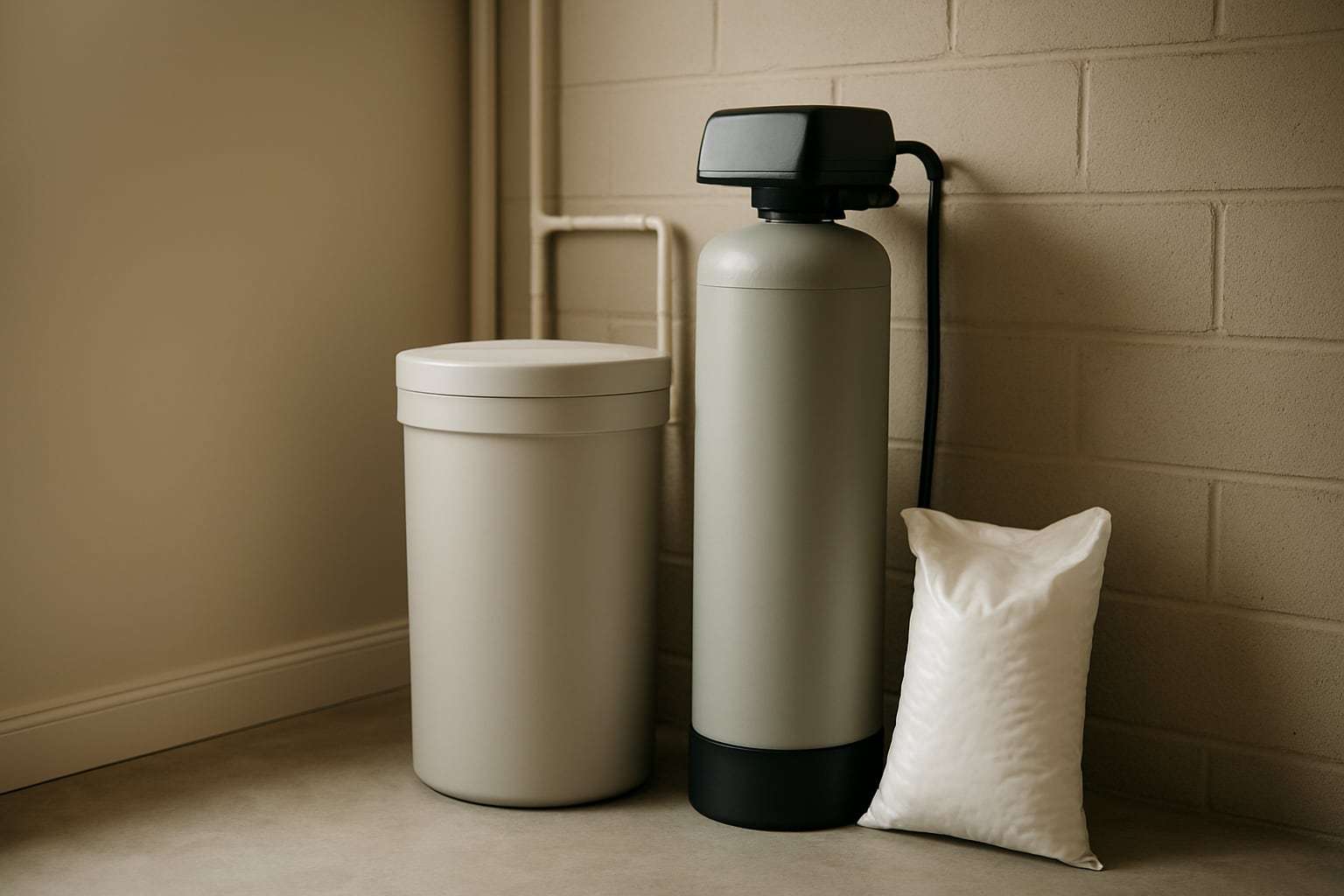
A salt-based water softener usually costs about $1,000 to $3,000 installed, our planning estimate from the published ranges below. Running it adds salt, water and sometimes a service visit. Over ten years, the total is roughly $1,150 to $8,000, depending on the unit, the installation and whether you hire service.
What you pay up front
Purchase and installation are the largest single costs. The ranges below come from This Old House and Bob Vila. Penn State separately puts softener hardware at about $500 to $1,500 before installation.
| Item | Range | Source |
|---|---|---|
| Single-tank softener unit | $500 to $1,700 | This Old House |
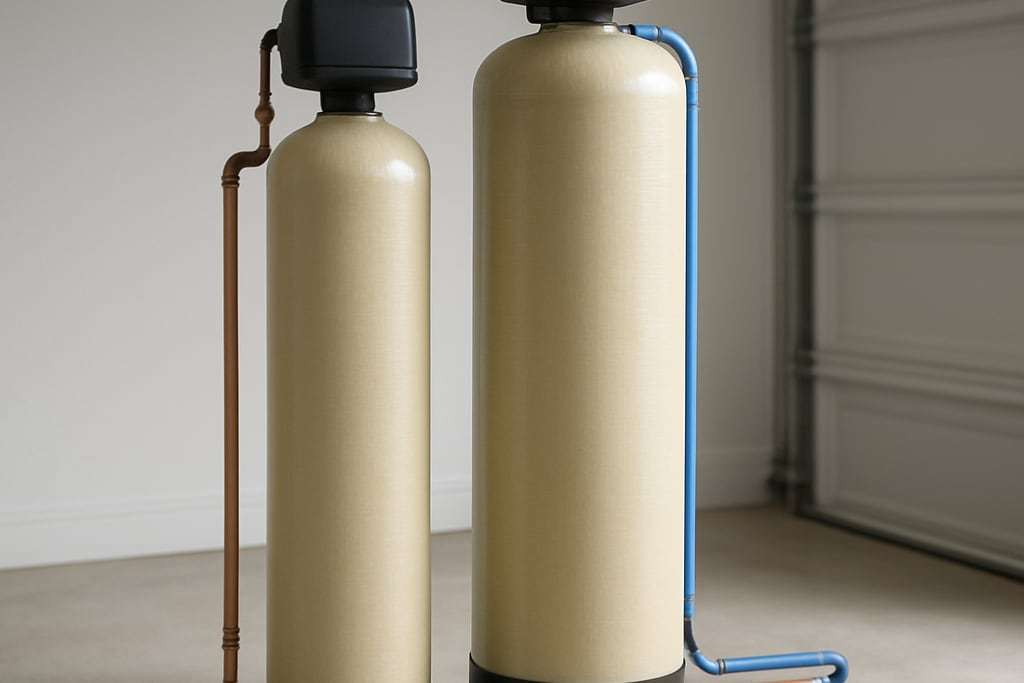
| Dual-tank softener unit | $1,000 to $5,000 | This Old House |
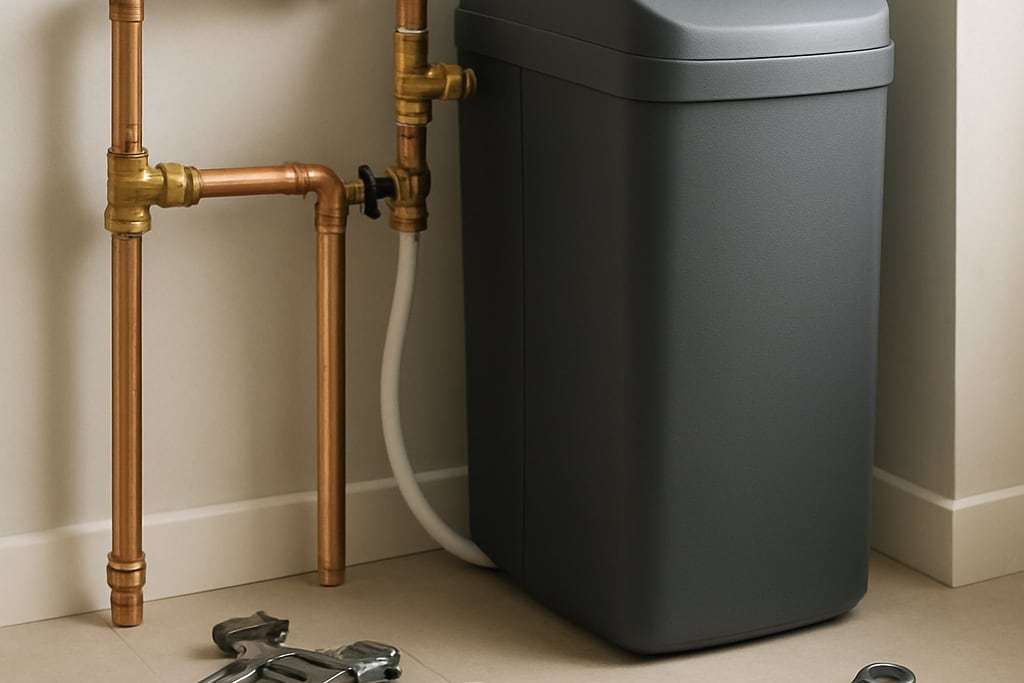
| Installation labor | $150 to $1,000, most $500 to $700 | This Old House |
| New plumbing for a softener loop | $200 to $800 | This Old House |
| Salt-free conditioner, installed | $800 to $4,000 | Bob Vila |
Complete salt-based kits sold direct from brands are listed at about $700 to $2,000 before installation. Those listings include a $699.99 iSpring kit, Matrixx from $1,466.95, SpringWell from $1,512 and a $1,995 Fleck 5600SXT 48,000-grain unit from Mid Atlantic Water. Some listings also show a higher “list” price next to the sale price. Compare the price you can actually buy today, not the struck-through figure.
The installed figure is the one to budget. The unit is only part of it, and the labor and plumbing can be the difference between a simple swap and a larger job. Local code and a licensed plumber decide what work is required and whether a permit applies.
Salt: the yearly cost you can estimate
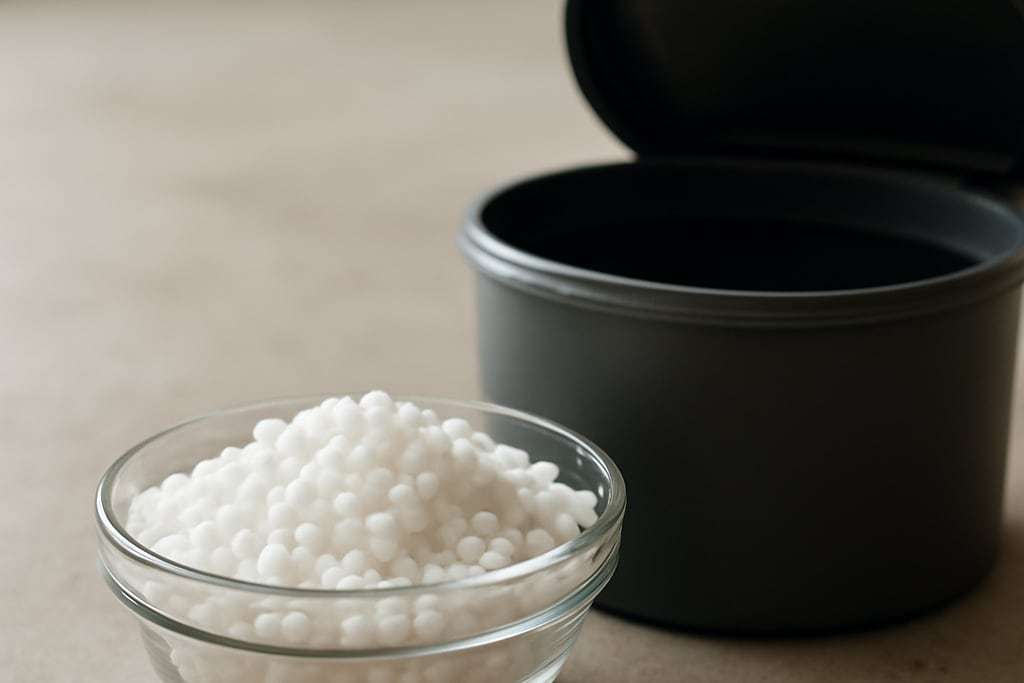
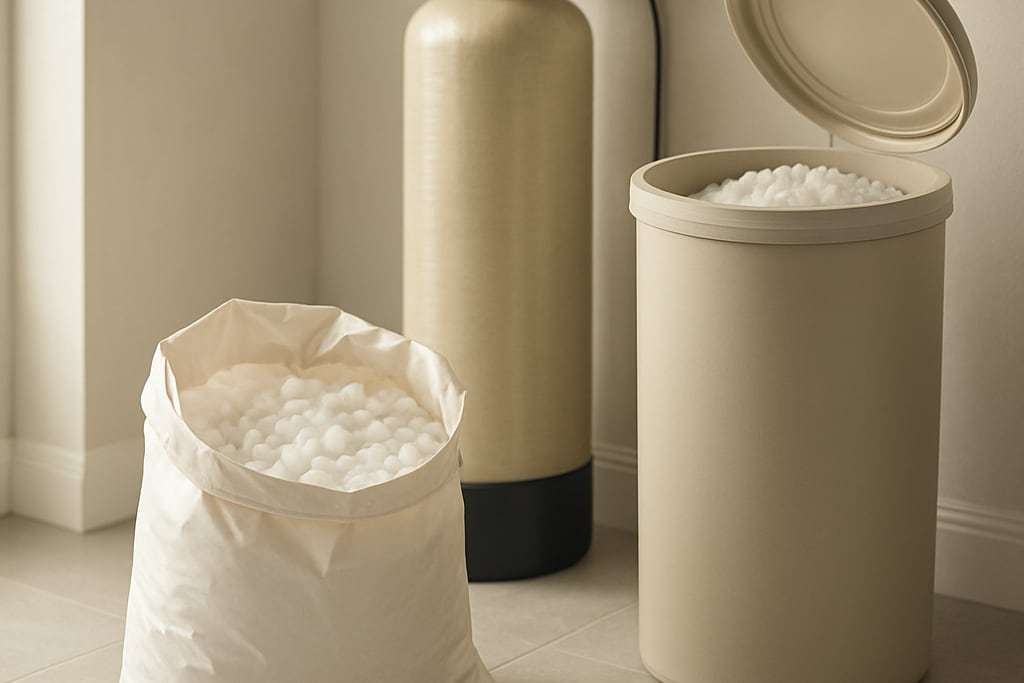
Sodium chloride salt costs $5 to $10 per 40-pound bag, according to NDSU Extension and This Old House. For a typical household, a planning estimate is roughly $50 to $150 a year for salt. That is an estimate, not a quote, because the real figure depends on how often the unit regenerates and how much salt each regeneration uses. You can work it out with three numbers:
Regenerations per year × pounds of salt per regeneration ÷ 40 × price per bag
Penn State’s example household (four people using 75 gallons each on 10 gpg water) needs about 3,000 grains a day, so a 20,000-grain unit regenerates every six or seven days, roughly 55 times a year. At that rate, every pound of salt in the regeneration setting adds about 55 pounds of salt a year, or about $7 to $14 at $5 to $10 a bag.
The salt dose changes the answer a lot. Matrixx’s 1.0 cubic foot unit uses 3, 6 or 15 pounds of salt per regeneration at its three settings, and a higher dose gives more capacity per cycle. That is why the salt setting matters as much as the grain rating.
Potassium chloride costs much more per bag. NDSU Extension says it can cost up to $25 per 40-pound bag. Check local prices before you choose it. Our potassium chloride comparison covers the trade-offs in more detail.
Water and drain
Each regeneration uses about 50 gallons of water, according to Nebraska Extension and Penn State. Matrixx’s 1.0 cubic foot unit lists 33, 59 or 67 gallons per regeneration, depending on its salt setting. Penn State notes that this water goes to the drain and can load a septic system, so check your system’s capacity if you have one. The septic system softener guide shows what to check.
Multiply the regenerations per year by the gallons per regeneration to get your yearly water use. The Penn State example comes to about 2,750 gallons a year at 50 gallons per regeneration. Multiply that by your local water rate to get a dollar figure. Electricity is a small separate running cost, so it is not in the table.
Service, cleaning and resin life
This Old House lists professional servicing at $150 to $300 a year and resin tank cleaning at about $100 to $200 a year. Bob Vila gives a broader annual maintenance range of $100 to $300. Service is optional, so treat it as a choice rather than a required expense. Ask your installer what a visit includes.
Resin is the part that does the work, and it does wear out. A typical life is about 10 to 20 years with good maintenance. Chlorine and iron can shorten that life, so ask for a resin replacement price when you get a quote.
The 10-year total
The table below adds the ranges above into one ten-year view. It is an estimate, not a quote.
| Cost over 10 years | Low | High | How it is built |
|---|---|---|---|
| Softener unit | $500 | $1,700 | Single-tank range |
| Installation labor | $150 | $1,000 | Installation range |
| New plumbing loop | $0 | $800 | $0 if your layout already works |
| Salt | $500 | $1,500 | About $50 to $150 a year (estimate) |
| Professional service (optional) | $0 | $3,000 | $0 if you do it yourself, $150 to $300 a year if hired |
| Total | $1,150 | $8,000 | Sum of the rows |
The high end adds every high cost at once, so treat it as a ceiling, not a typical bill. The low end assumes no new plumbing and no service visits. Your total will most likely fall between the two, and the salt setting and your water hardness drive the running cost.
Ways to lower the total
- Buy the right size. A unit that regenerates more often uses more salt and water each year. Use the water softener size calculator to find the grains you need before you compare capacities.
- Compare the salt setting, not just the grain rating. On the 1.0 cubic foot Matrixx, the 32,000-grain rating only applies at the highest salt dose of 15 pounds per regeneration. A lower dose gives less capacity, so compare grains and salt use together.
- Consider a metered valve. Vendors generally say metered valves use less salt and water than timers. Matrixx claims up to 70 percent less salt and water than its standard settings, which is the brand’s figure, not an independent one.
- Avoid paying for the wrong product. Bob Vila lists salt-free conditioners at $800 to $4,000 installed, and they do not remove hardness. Read the product type before you compare prices.
Costs the numbers leave out
Several costs are not in the table because they vary by home: electricity, your local water rate, permits, any drain or electrical work, and resin replacement. Ask for each one in writing, so the quote you compare is the one you will pay.
When a softener is not the right purchase
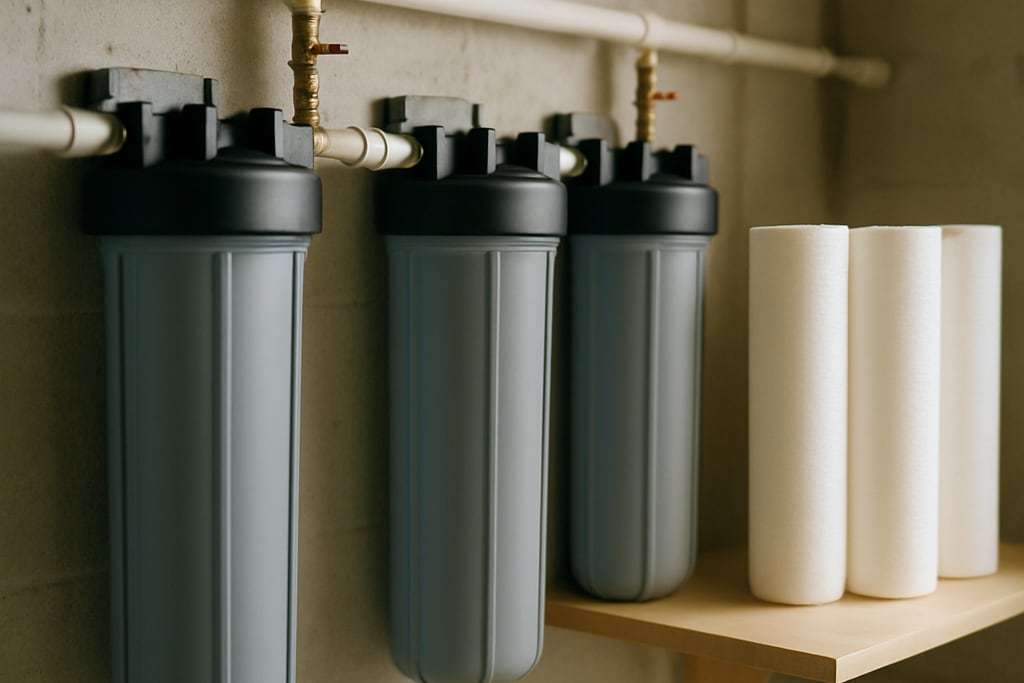
A water softener only reduces hardness. If your main problem is chlorine taste, the answer may be a filter rather than a softener, and the cost comparison changes. Our whole-house filter cost guide covers that side. If your water has iron, sulfur or bacteria, test before you buy anything, because a softener does not solve those problems alone.
Frequently asked questions
How much does a water softener cost installed?
Planning on about $1,000 to $3,000 installed for a salt-based unit is a reasonable starting estimate. The unit alone ranges from about $500 for a single-tank model to $1,700, according to This Old House, and installation labor is commonly $150 to $1,000. Get two or three written quotes, because the total depends on your plumbing.
How much salt does a water softener use each year?
A planning estimate is roughly $50 to $150 a year for a typical household, at $5 to $10 per 40-pound bag of sodium chloride. The real figure depends on how often the unit regenerates and how much salt each regeneration takes. Penn State's example household regenerates about every six to seven days, so about 55 times a year.
Does a water softener waste a lot of water?
Each regeneration uses about 50 gallons of water, according to Nebraska Extension and Penn State. Penn State also notes that this can load a septic system. At that rate, a softener that regenerates about 55 times a year uses about 2,750 gallons, so check your local water rate to put a dollar figure on it.
Is potassium chloride salt much more expensive?
Yes. NDSU Extension says potassium chloride can cost up to $25 per 40-pound bag, compared with $5 to $10 for sodium chloride. Check local prices before you choose, because the salt you buy is an ongoing cost.
Do I have to pay for professional service?
No. Service is optional, but This Old House lists professional servicing at $150 to $300 a year and resin tank cleaning at $100 to $200 a year. Ask your installer what a service visit includes before you sign up for a plan.