The short answer
For one to three people, start with the Fleck 5600SXT 32,000-grain softener at $1,495 from Mid Atlantic Water: 1.0 cubic foot of resin in a 9 by 48 inch tank, a 33 by 57 by 19 inch footprint and 9 GPM service flow. If you want app control, the Matrixx MXX-100 is from $1,466.95. Work out your daily grains first: a unit that is too small regenerates often, and the salt setting changes the yearly salt bill as much as the size.
We earn a commission when you buy through some links on this site, at no extra cost to you. It never changes what we recommend.
Our picks
Fleck 5600SXT 32,000-grain softener, 1.0 cu ft (compact)
Salt-based softener
1.0 cu ft of resin in a 9 x 48 in tank; the seller publishes the full footprint (33 x 57 x 19 in, about 98 lb) and a 9 GPM flow. $1,495.
- Capacity32,000 grains nominal; about 30,000 at 15 lb salt and about 24,000 at 9 lb (seller's rating)
- Flow rate9 GPM service; 2.0 GPM backwash
- Size and weight33 in wide x 57 in tall x 19 in deep with both tanks side by side; about 98 lb shipping weight
Listed price$1,495
Check price at Mid Atlantic WaterSpecs & trade-offs
- Capacity
- 32,000 grains nominal; about 30,000 at 15 lb salt and about 24,000 at 9 lb (seller's rating)
- Resin and mineral tank
- 1.0 cu ft of 10% crosslink resin; 9 in x 48 in tank; brine tank included
- Size and weight
- 33 in wide x 57 in tall x 19 in deep with both tanks side by side; about 98 lb shipping weight
- Flow rate
- 9 GPM service; 2.0 GPM backwash
- Salt per regeneration
- About 5 lb
- Sized for
- 1 to 3 people on water up to about 15 grains per gallon
- Iron limit
- Dissolved (clear-water) iron up to about 1 ppm; above that an iron filter goes first
- Warranty
- 5 years on the valve, 10 years on the mineral tank, 5 years on the brine tank
- Published footprint and weight, so you can check the space before you order
- Metered valve with a 14-day override; parts and service are easy to find
- Free shipping to the lower 48 states and a free phone sizing consultation
- The seller itself usually starts homes at the 48,000-grain size, because a 32,000 regenerates more often if water use rises
- Iron limit is only about 1 ppm
- No third-party softener certification is listed; plumber recommended
Matrixx Smart Metered Water Softener (MXX-100 / MXX-150 / MXX-200)
Salt-based softener (metered)
The MXX-100 uses a 9 x 48 in tank with 1 cu ft of resin, rated 15,000 to 32,000 grains depending on the salt setting, with 10 GPM service flow.
- CapacityMXX-100 15,000 / 24,000 / 32,000; MXX-150 22,500 / 36,000 / 48,000; MXX-200 30,000 / 48,000 / 64,000 (at HE / Optimal / Max salt settings)
- Flow rateService 10, 15 or 20 GPM; peak 12, 17 or 22 GPM
- CertificationBluetooth valve described as WQA Gold Seal certified; components NSF/ANSI 61 and WQA certified
Listed price$1,466.95 (10 GPM model); $1,635 (15 GPM); $1,775 (20 GPM)
Check price at US Water SystemsSpecs & trade-offs
From $1,466.95.
- Capacity (grains)
- MXX-100 15,000 / 24,000 / 32,000; MXX-150 22,500 / 36,000 / 48,000; MXX-200 30,000 / 48,000 / 64,000 (at HE / Optimal / Max salt settings)
- Max capacity (new)
- MXX-100 35,000; MXX-150 53,000; MXX-200 70,000
- Flow rate
- Service 10, 15 or 20 GPM; peak 12, 17 or 22 GPM
- Salt and water per regeneration (MXX-100, 1 cu ft)
- 3 / 6 / 15 lb salt; 33 / 59 / 67 gal water
- Warranty
- Tank and resin lifetime; valve and electronics 10 years; one-year satisfaction guarantee
- Certification
- Bluetooth valve described as WQA Gold Seal certified; components NSF/ANSI 61 and WQA certified
- Metered (demand-initiated) regeneration with Bluetooth app control
- Brand claims up to 70% less salt and water than standard settings
- No NSF/ANSI 44 softener certification is listed; the certifications named are for the valve and components
- Capacity depends on the salt setting, and efficiency drops as the salt dose rises
WCSTB45KG (45,000-grain whole-house water softener)
Salt-based softener
Listed at 10 x 10 x 50 in and 100 lb for $699.99, but no flow rate, resin type or certification is published.
- Capacity45,000 grains
- Size and weight10 in x 10 in x 50 in; 100 lb
- Warranty1 year; 30-day money-back
Specs & trade-offs
- Capacity
- 45,000 grains
- Regeneration
- Automatic, with digital valve
- Size and weight
- 10 in x 10 in x 50 in; 100 lb
- Warranty
- 1 year; 30-day money-back
- Automatic regeneration with a digital valve
- Lowest price of the complete softener kits compared here
- iSpring does not publish a flow rate, resin type or certification
- The 99.71% hardness-reduction figure is the company's own; no test report is shown
- 1-year warranty
| Model | Best for | Type | Listed price |
|---|---|---|---|
| Fleck 5600SXT 32,000-grain softener, 1.0 cu ft (compact) | Best for 1-3 people | Salt-based softener | $1,495 |
| Matrixx Smart Metered Water Softener (MXX-100 / MXX-150 / MXX-200) | Best small unit with an app | Salt-based softener (metered) | $1,466.95 (10 GPM model); $1,635 (15 GPM); $1,775 (20 GPM) |
| WCSTB45KG (45,000-grain whole-house water softener) | Cheapest, but unproven | Salt-based softener | $699.99 |
A small water softener is a salt-based unit with a compact tank and a smaller grain capacity, sized for fewer people or softer water. Small in grains and small in footprint are different things, so check both. For a two-person home on 10 gpg water, which needs about 1,500 grains a day, a 32,000-grain unit regenerates about every three weeks, while a 15,000-grain setting regenerates about every ten days. The smaller unit is not the better buy if it regenerates too often.
Two meanings of small
Shoppers use “small” to mean two different things. One is a small tank, which matters if you have a tight closet or basement. The other is a small grain capacity, which matters for how often the unit regenerates. A compact tank can still hold a large grain capacity, and a large tank can be sized for a small household.
Measure the space first, then check the grains. The footprint decides where the unit can go. The grain capacity decides how much salt and water it uses over a year.
Work out the grains a small household needs
Use the same arithmetic as any softener. Multiply the gallons each person uses per day by the number of people, then by your hardness in grains per gallon. Penn State’s example uses 75 gallons per person per day, which sellers also commonly use, so treat your own water use as the real number.
Take two people on 10 gpg water. That is 75 times 2 times 10, or 1,500 grains a day. The Matrixx 1.0 cubic foot unit is rated at 15,000 grains on its lowest salt setting, 24,000 at the middle setting and 32,000 at the highest. Divide each rating by 1,500 to see how often it regenerates:
- 15,000 grains: about every 10 days
- 24,000 grains: about every 16 days
- 32,000 grains: about every 21 days
Hardness changes the answer a lot. At 5 gpg, the same two people need about 750 grains a day, and each regeneration lasts twice as long. Before you size anything, get a lab test or a reliable hardness number; our water hardness by city table is a quick start. The water softener size calculator runs this arithmetic with your own numbers.
How the salt setting changes yearly salt use
Salt use depends on two things: how often the unit regenerates and how much salt each regeneration uses. The Matrixx 1.0 cubic foot unit lists both for each setting, so we can work it through for the two-person, 10 gpg household above (1,500 grains a day):
| Setting | Salt per regeneration | Regenerates every | Times a year | Salt a year | Water per regeneration | Water a year |
|---|---|---|---|---|---|---|
| 15,000 grains | 3 lb | about 10 days | about 36 | about 110 lb (about 3 bags) | 33 gal | about 1,190 gal |
| 24,000 grains | 6 lb | about 16 days | about 23 | about 140 lb (about 3.5 bags) | 59 gal | about 1,360 gal |
| 32,000 grains | 15 lb | about 21 days | about 17 | about 260 lb (about 6.5 bags) | 67 gal | about 1,140 gal |
At $5 to $10 a 40-pound bag, that is roughly $15 to $30 a year for salt at the lowest setting and $32 to $65 at the highest. These are estimates from the maker’s table, not measured results. The low setting removes about 5,000 grains per pound of salt, while the highest removes about 2,100, so a softener’s efficiency drops as the salt dose rises. The Fleck lists the same pattern: about 30,000 grains at 15 lb of salt and about 24,000 at 9 lb.
So the lower-capacity, higher-efficiency setting uses less salt per year, and water use comes out about the same either way (roughly 1,100 to 1,400 gallons). What a too-small unit costs you is more cycles: it regenerates more often and sends water to the drain more often. Penn State notes that each regeneration sends water to the drain, which can load a septic system.
The practical advice is to pick a unit whose rating at an efficient setting covers your daily grains with some room to spare, then ask the installer or the manual which setting the unit ships on.
Compare the three picks
The table puts the three picks side by side. For the whole field of softeners, see the comparison page.
| Spec | Fleck 5600SXT 32,000 | Matrixx MXX-100 | iSpring WCSTB45KG |
|---|---|---|---|
| Grain capacity | 32,000 nominal; about 30,000 at 15 lb of salt, about 24,000 at 9 lb | 15,000, 24,000 or 32,000 at 3, 6 or 15 lb of salt (35,000 maximum when new) | 45,000 |
| Service flow | 9 GPM | 10 GPM (12 GPM peak) | Not published |
| Tank and footprint | 9 by 48 inch tank; 33 by 57 by 19 inches with the brine tank, about 98 lb | 9 by 48 inch main tank | Listed 10 by 10 by 50 inches, 100 lb |
| Valve | Metered, 14-day override | Metered, Bluetooth app | Automatic, digital valve |
| Warranty | 5 years valve, 10 years mineral tank, 5 years brine tank | Tank and resin lifetime; valve and electronics 10 years; one-year satisfaction guarantee | One year; 30-day money-back |
| Price | $1,495 | From $1,466.95 | $699.99 |
| Certification shown | None listed | Valve listed as WQA Gold Seal; components NSF/ANSI 61 and WQA | None published |
The Fleck is the only one of the three that publishes its full footprint, its weight and an iron limit (about 1 ppm of clear-water iron). The Matrixx figures apply to its 1.0 cubic foot model, and the other Matrixx sizes are larger. The iSpring is the cheapest by far, but with no flow rate, resin type or certification published, it is a gamble on the one thing a small home cannot afford, a slow shower.
Flow still matters in a small home
Grain capacity tells you how much hardness the unit can remove. Flow rate tells you how much water it can supply while it is working. Small homes often run a shower and a washer at once, so check the peak use, not only the average.
Sellers’ flow guides list a shower at about 1.5 to 3 gallons per minute and a washing machine at about 2 to 5. Those are rules of thumb, not specifications for any one unit. Compare them with the service flow each unit lists: 9 GPM for the Fleck, 10 GPM for the Matrixx MXX-100, and none for the iSpring. Our flow rate calculator shows the same math for a filter.
Space, drain and installation
Measure before you order. Check the tank height and width, the clearance for the brine tank and the lid, and where the drain connects. Check whether the valve needs a power outlet, and where the outlet will be. Penn State’s regeneration figure of about 50 gallons is a reason to plan the drain route early.
Installing a softener means plumbing work, and local code and a licensed plumber decide what can be connected and whether a permit is needed. The Fleck seller recommends a plumber, and drain tubing, fittings and salt are not included. Installation labor ranges from about $150 to $1,000, and new plumbing can add $200 to $800. Our cost guide puts those ranges into a ten-year total.
Who a small softener suits
A compact unit suits a small household with a clear daily grain number that falls well inside the unit’s rating at the salt setting you will use. It also suits a home where the space is the real limit and the water is only moderately hard. The Fleck seller sizes the 32,000-grain model for one to three people on water up to about 15 grains per gallon.
Who should skip a small softener
Skip a small unit if your daily grain use is close to its rating, because it will regenerate often and send more water to the drain. Skip it if your water has iron, manganese or hydrogen sulfide above the unit’s limit, because iron can clog resin. Penn State warns that oxidized (red) iron should be filtered first. Skip it too if you need a complete-system certification in writing and the seller cannot provide one.
Finally, skip any unit described as a salt-free softener. A salt-free conditioner does not remove hardness, and that is a different product even when it is compact.
Questions to ask before you buy
- How many grains per day does my household use, and which salt setting gives the capacity I need?
- What is the service flow and the peak flow for this exact model?
- What are the tank dimensions, the brine tank footprint and the drain requirements?
- Is there a complete-system certification, such as NSF/ANSI 44, and can you send the listing?
- What does the warranty cover, and for how long?
- What is the installed price, including bypass, delivery and any new plumbing?
For a full comparison of larger and compact softeners, read the best water softener guide.
Frequently asked questions
Can a small water softener handle a family?
It depends on the grains your household uses each day, not on headcount alone. A family of four on 10 gpg water needs about 3,000 grains a day, so a 15,000-grain setting would regenerate only about every five days. The Fleck seller itself usually starts homes at the 48,000-grain size for that reason. Work out your number with the formula in this guide before you choose.
Does a smaller softener use more salt?
Not necessarily. Yearly salt depends on the salt dose per regeneration as well as how often the unit regenerates. On the Matrixx 1.0 cubic foot unit, the 15,000-grain setting uses 3 pounds per cycle and the 32,000-grain setting uses 15, so for the same household the lower setting uses less salt over a year even though it regenerates more often.
How many people is the Fleck 32,000-grain softener for?
The seller sizes it for 1 to 3 people on water up to about 15 grains per gallon. It lists about 30,000 grains at 15 lb of salt and about 24,000 at 9 lb, using about 5 lb of salt per regeneration. If your household is growing or your water use is high, the 48,000-grain model regenerates less often.
Is a 45,000-grain softener too big for a small home?
Not necessarily, but it costs more up front and it regenerates less often. At 1,500 grains a day, a 45,000-grain unit lasts about 30 days between regenerations. Resin that sits for weeks between cycles is a reason to size closer to your need. Confirm the iSpring's installed footprint before you order.
Do I need a bypass valve on a small softener?
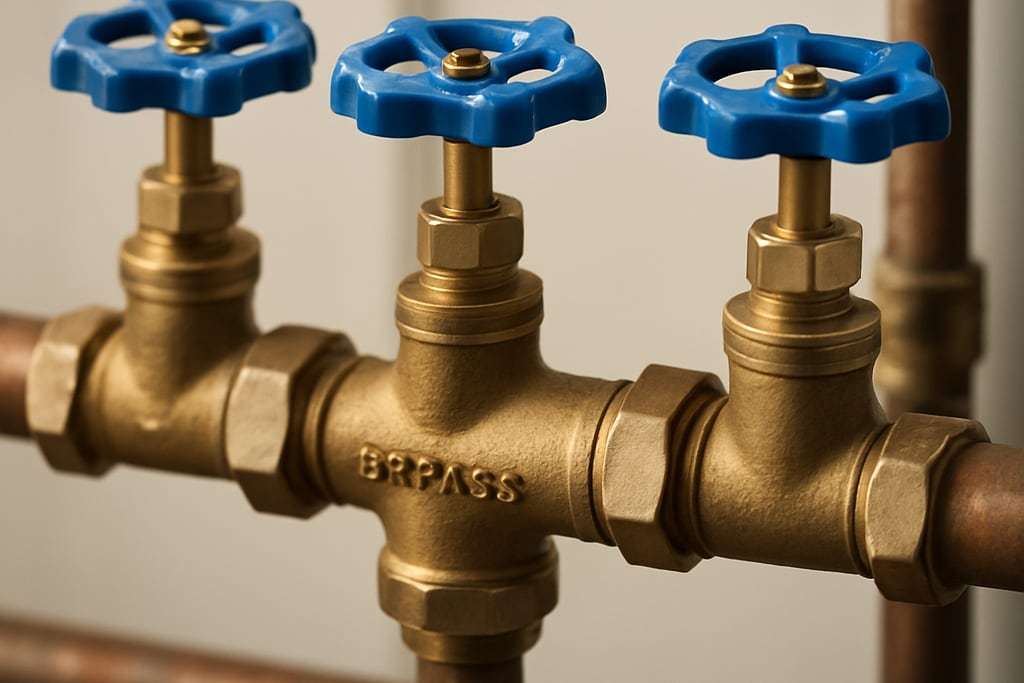
A bypass lets you shut the softener off from the plumbing for service. Whether you need an add-on depends on your installer's plan and local code, so ask before you buy, and price it with the main unit. Our guide to the bypass valve explains what it does.