The short answer
SpringWell's CF1 and Aquasana's Rhino both aim at chlorine, taste and sediment on city water, and both use KDF in the media. The differences are in the flow numbers each brand lists, the certifications each names, the filter schedule and the warranty terms. Choose by bathroom count and flow first, then by the certification you need for each claim. SpringWell lists its CF filter from $1,092 and Aquasana lists the Rhino at $1,998.
SpringWell’s CF1 and Aquasana’s Rhino both target chlorine, taste and sediment on city water, and both put KDF in the media. They are not interchangeable, though. The brands list flow in different ways, name different certifications, and set different filter schedules and warranty terms. This comparison is based on the brands’ published specifications, not on our own testing of either unit. If you want a certificate to show for chlorine, the Aquasana Rhino is the one to start with, at $1,998.
The short answer
Start with bathroom count and flow. A home with one to three bathrooms that runs about 9 GPM at peak fits the SpringWell CF1 range. If you want a named NSF/ANSI 42 test for chlorine on the brand page, the Aquasana Rhino gives you that. If your utility uses chloramine, the Rhino Chloramines is the model the brand tests for that job, while SpringWell’s page names no test. Neither system softens water, and neither is a complete answer for untested well water.
Side by side
Both brands run promotions, so check the current figure. SpringWell shows a “starting at” price during a sitewide sale.
| Feature | SpringWell CF1 | Aquasana Rhino (WH-1000) |
|---|---|---|
| Price | From $1,092 for the CF series (size not stated) | $1,998 |
| Listed flow | 9 GPM, type not stated | 7.0 GPM rated, 14.6 GPM peak |
| Sizing | 1 to 3 bathrooms | No bathroom range listed |
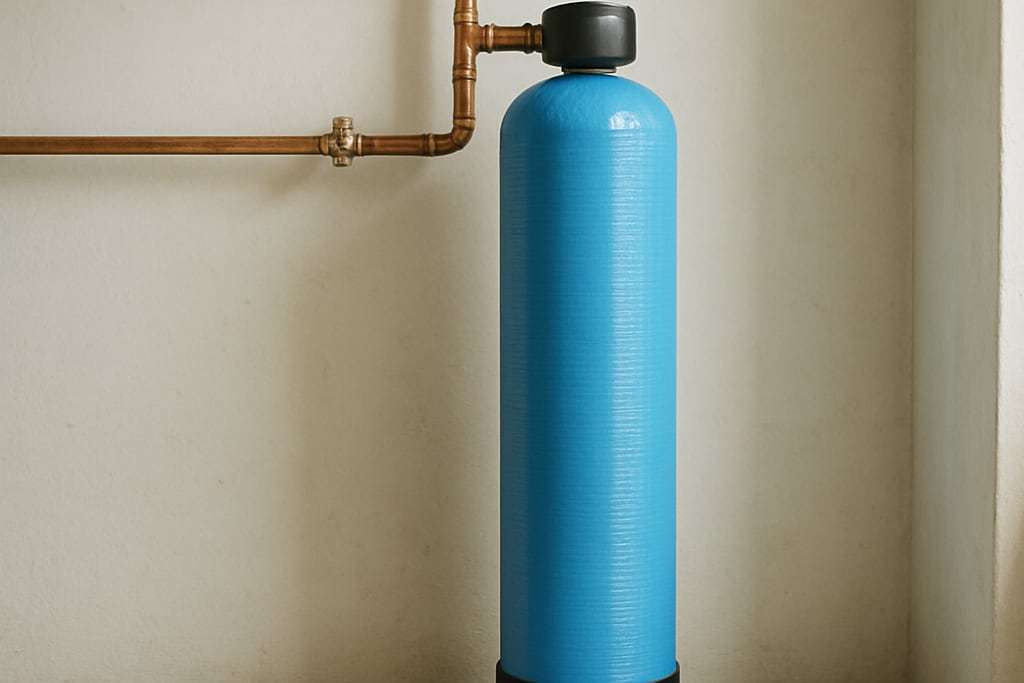
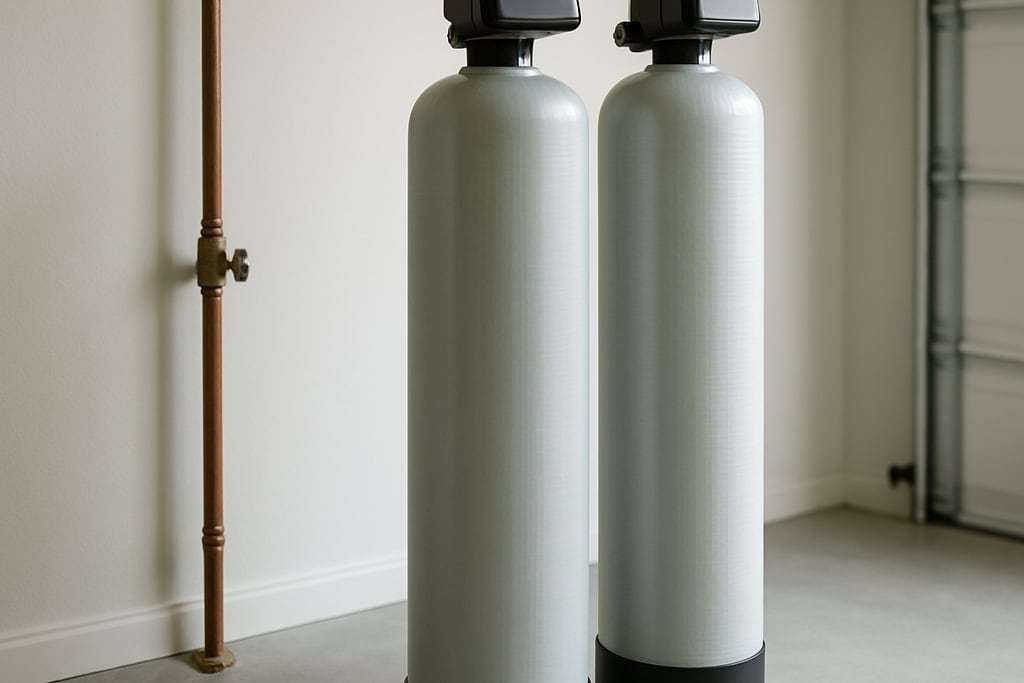
| Design | Single media tank, upflow | Dual tank, upflow: pre-filter, carbon, KDF, post-filter |
| Media | KDF, catalytic carbon, 5-micron sediment after the tank | Pre-filter, activated carbon, copper-zinc KDF, post-filter |
| Connection | 1 inch | Fits 3/4-inch or 1-inch mains |
| Pressure | 25 to 80 PSI | Up to 100 PSI |
| Water temperature | 36 to 120 F | 40 to 90 F |
| Media life | 10 years or 1,000,000 gallons (brand figure) | 1,000,000 gallons or 10 years, whichever comes first |
| Pre-filter | Every 6 to 9 months | Every 2 months standard, every 6 months low-maintenance option |
| Post-filter | Not listed | Every 6 months |
| Named certification | None on the page | Tested to NSF/ANSI 42 for chlorine; tank WQA certified to NSF/ANSI/CAN 61 |
| Chloramine | Catalytic carbon; no test named | Separate Rhino Chloramines model, tested to NSF/ANSI 42 for up to 83% chloramine |
| PFAS | Brand claim; no certification on the page | No PFAS claim on the Rhino page |
| Warranty | Lifetime against defects in covered parts, with conditions | 10-year limited |
| Guarantee | 6-month money-back for unused, uninstalled units, 10% restocking fee | 90-day satisfaction guarantee |
| Softening | No | No |
| Bacteria | Not for microbiologically unsafe water | Not addressed by the base unit; UV add-on needed for well water |
Flow ratings are not like for like
This is the most common mistake in comparing these two. SpringWell lists one number for the CF1 without saying whether it is service or peak. Aquasana lists two numbers for the Rhino: 7.0 GPM rated and 14.6 GPM peak. A 9 GPM figure is not directly comparable with a 14.6 GPM peak.
To compare the two, time your own peak. Time a faucet filling a one-gallon bucket and divide 60 by the seconds, then add the fixtures you run together. A common rule of thumb is about 7 to 10 GPM for two or three bathrooms and 12 GPM or more for four or more. Then ask SpringWell what its figure means before you decide, or run your fixtures through the flow rate calculator.
Media and certification claims
Both systems use KDF, which the brands describe as helping reduce chlorine and heavy metals and slowing bacteria in the bed. SpringWell makes chlorine and chloramine claims for the CF line. Aquasana’s standard Rhino makes a chlorine claim, and chloramine is covered by the separate Rhino Chloramines model. The difference is in how those claims are backed.
Aquasana names a test standard: the standard Rhino is tested to NSF/ANSI 42 for up to 97% chlorine reduction, and the chloramine model is tested for up to 83% chloramine reduction. SpringWell’s CF page lists chlorine, chloramine, PFAS and heavy metals as claims, with no NSF or WQA certification named. Neither brand names a PFAS certification.
Check any claim against the exact model in the NSF or WQA database. A test on a brand page is not the same as a certification listing. EPA’s 2024 PFAS rule sets 4 parts per trillion for PFOA and PFOS in public water systems, and private wells are outside that rule.
Filter life and upkeep
The SpringWell CF1 needs its 5-micron sediment pre-filter changed every 6 to 9 months, and its media is rated for 10 years or 1,000,000 gallons. That works out to about one or two pre-filter changes a year.
The Rhino’s standard pre-filter is listed every 2 months, which is about six changes a year. The low-maintenance pre-filter is listed every 6 months, which is two a year, and it is sold as an upgrade. The post-filter is listed every 6 months. The tank is rated for 1,000,000 gallons or 10 years.
Water quality and water use change these numbers, and University of Georgia Extension notes that six months is a common planning interval for carbon cartridges. Aquasana sells the low-maintenance pre-filter as a $348 upgrade. Ask SpringWell for its cartridge prices before you compare running costs, and see the cost guide for the wider picture.
Warranty and guarantee terms
SpringWell’s warranty covers defects in listed parts for life, with conditions. Its 10-year tank warranty applies only to tanks 14 inches or larger, which excludes the CF1’s 9-inch tank. Its return window is 6 months for unused, uninstalled units with a 10% restocking fee, and installed systems are not returnable unless defective.
Aquasana’s Rhino has a 10-year limited warranty and a 90-day satisfaction guarantee. Read the full guarantee terms on the brand’s site, because the conditions after installation decide what a return would involve. The SpringWell and Aquasana terms are not built the same way, so compare them line by line.
Which one for which home
- 1 to 3 bathrooms, chlorine taste, city water: the SpringWell CF1 is in the right size range. Confirm whether 9 GPM is service or peak.
- Chloramine utility: the Aquasana Rhino Chloramines has a named test for that job. Ask SpringWell for a test on the CF model before you rely on its chloramine claim.
- Need a named chlorine test on the brand page: the Aquasana Rhino gives you a named NSF/ANSI 42 claim for the standard and chloramine models.
- Four or more bathrooms: SpringWell’s CF4 and CF+ are sized for larger homes, and the Rhino’s 14.6 GPM peak is a different kind of number from SpringWell’s, so compare with your own peak measurement.
- Well water: neither system is a complete answer. The CF page says not to use it where water is microbiologically unsafe, and the Rhino needs a UV add-on for bacteria. Test first, using the well water testing guide.
Who should skip both
- Anyone who needs hardness removed. Neither system softens water. Carbon does not remove calcium and magnesium.
- Anyone who needs a certified PFAS or lead reduction without a listing for the exact model.
- Homes with iron or sulfur above the ratings. Both brands say iron and related problems need the right step before the filter.
- Untested well owners. A carbon-based filter is not a substitute for a test and a treatment plan built on the results.
Next steps
For the full set of options, read the best whole house water filter guide. If one brand looks close, the SpringWell CF1 review and the Aquasana Rhino review cover each model in more detail.
Frequently asked questions
Which is better for chloramine, SpringWell or Aquasana?
Aquasana sells a chloramine-specific model, the Rhino Chloramines, which the brand says is tested to NSF/ANSI 42 for up to 83% chloramine reduction. SpringWell's CF page lists catalytic carbon and a chloramine claim, but no test or certification. Confirm which disinfectant your utility uses before you decide.
Which has the higher flow rating?
The two brands list flow differently. SpringWell's CF1 shows 9 GPM without saying whether that is service or peak flow. Aquasana's Rhino lists 7.0 GPM rated and 14.6 GPM peak. Compare service with service and peak with peak, and ask SpringWell what its number means.
Does either system soften water?
No. Neither the SpringWell CF1 nor the Aquasana Rhino is a softener. Carbon media does not remove hardness minerals, so both leave calcium and magnesium in the water. If hardness is your problem, look at a softener instead.
Which one is better for well water?
Neither is a complete well-water solution. SpringWell says not to use the CF filter where water is microbiologically unsafe. The Rhino's base unit does not address bacteria, and it needs the UV add-on for well water. Test the well first, then choose the step that matches the results.