The short answer
The Aquasana Rhino (WH-1000, $1,998) is a dual-tank whole-house filter with a pre-filter, carbon, KDF and a post-filter, rated at 7.0 GPM with a 14.6 GPM peak. The brand says the standard model is tested to NSF/ANSI 42 for up to 97% chlorine reduction, and the Rhino Chloramines model is tested for chloramine. It does not soften water or treat bacteria, so well owners need a separate UV step.
We earn a commission when you buy through some links on this site, at no extra cost to you. It never changes what we recommend.
Our picks
Rhino Whole House Water Filter (WH-1000)
Whole-house filter (city water)
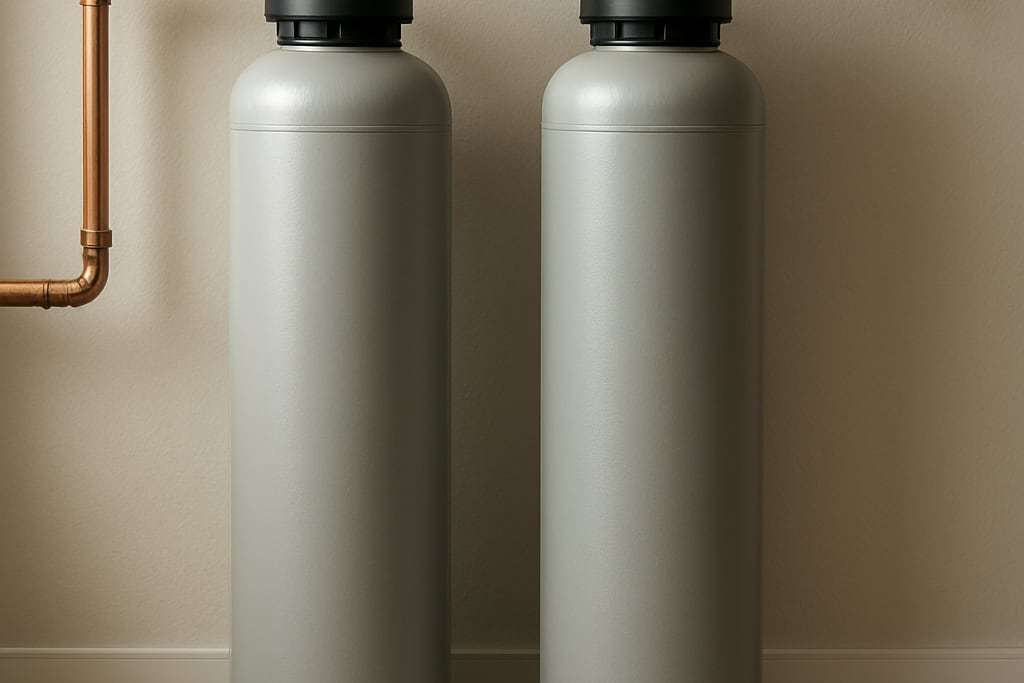
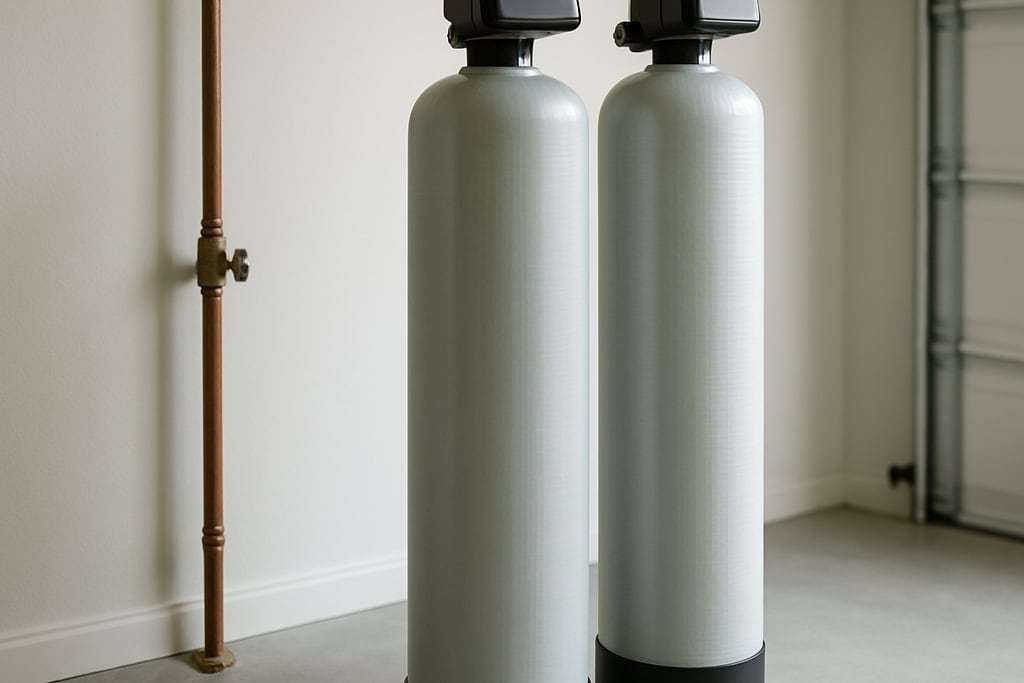
The standard Rhino has a pre-filter, a carbon tank, a KDF tank and a post-filter.
- Capacity1,000,000 gallons or 10 years, whichever comes first (maker's claim)
- Flow rate7.0 GPM rated; 14.6 GPM peak
- StagesPre-filter, activated carbon tank, copper-zinc (KDF) tank, post-filter
Listed price$1,998
Check price at AquasanaSpecs & trade-offs
The brand rates it at 7.0 GPM with a 14.6 GPM peak and says it is tested to NSF/ANSI 42 for up to 97% chlorine reduction. It does not soften water.
- Flow rate
- 7.0 GPM rated; 14.6 GPM peak
- Capacity
- 1,000,000 gallons or 10 years, whichever comes first (maker's claim)
- Stages
- Pre-filter, activated carbon tank, copper-zinc (KDF) tank, post-filter
- Certification
- Chlorine reduction up to 97%, tested to NSF/ANSI 42; tank WQA certified to NSF/ANSI/CAN 61; optional UV is NSF/ANSI 55 Class B
- Warranty
- 10-year limited; 90-day satisfaction guarantee
- Connection and pressure
- Fits 3/4 in or 1 in mains; 100 PSI max; 40-90 F
- Independently tested to NSF/ANSI 42 for up to 97% chlorine reduction (brand's wording)
- Large-capacity dual-tank design for chlorine reduction on city water
- Does not soften, and the base unit does not address bacteria or viruses
- Pre-filter changes are every 2 months on the standard setup; a low-maintenance upgrade (6 months) costs $348 more
- Iron may need a specialized filter
Rhino Chloramines (WH-1011)
Whole-house filter (chloramine, city water)
The chloramine version, which the brand says is tested to NSF/ANSI 42 for up to 83% chloramine reduction and 97% chlorine reduction.
- Capacity1,000,000 gallons or 10 years, whichever comes first
- Flow rate7.0 GPM rated; 10.3 GPM peak
- CertificationIndependently tested to NSF/ANSI 42 for up to 83% of chloramines and 97% of chlorine; tank certified to NSF/ANSI/CAN 61
Listed price$2,798
Check price at AquasanaSpecs & trade-offs
The brand rates it at 7.0 GPM with a 10.3 GPM peak.
- Flow rate
- 7.0 GPM rated; 10.3 GPM peak
- Capacity
- 1,000,000 gallons or 10 years, whichever comes first
- Certification
- Independently tested to NSF/ANSI 42 for up to 83% of chloramines and 97% of chlorine; tank certified to NSF/ANSI/CAN 61
- Warranty
- 10-year limited; 90-day satisfaction guarantee
- Well water
- Listed as recommended for well water, but UV must be added for bacteria
- Tested to NSF/ANSI 42 for chloramine as well as chlorine (brand's figures)
- 10-year limited warranty
- The filter alone does not treat bacteria; UV must be added for well water
- Costs $800 more than the standard Rhino
| Model | Best for | Type | Listed price |
|---|---|---|---|
| Rhino Whole House Water Filter (WH-1000) | Model reviewed: standard Rhino, WH-1000 | Whole-house filter (city water) | $1,998 |
| Rhino Chloramines (WH-1011) | Model reviewed: Rhino Chloramines, WH-1011 | Whole-house filter (chloramine, city water) | $2,798 |
The Aquasana Rhino is a whole-house filter for city water, built as two tanks in series. It has a pre-filter, an activated carbon tank, a copper-zinc KDF tank and a post-filter. Aquasana rates the standard model at 7.0 GPM with a 14.6 GPM peak, and it names a chloramine version as well. It is not based on our own testing, so read the performance figures as the brand’s claims.
What the Rhino is and who it is for
The Rhino is an upflow system built for chlorine reduction on city water. It uses two tanks in series rather than one cartridge housing. The brand also sells optional add-ons, including a UV stage, a salt-free conditioner and a bypass valve. The conditioner is not a softener. It changes how minerals behave in the water and does not remove them.
The Rhino is a better fit for a home on city water with chlorine taste or odor and a steady demand, not a home on untreated well water. Its base unit does not treat bacteria or viruses, so a well needs a lab test and, where bacteria are present, a UV or other treatment step chosen for that problem.
The two models in this review
The standard Rhino (WH-1000) is the model most readers will compare first. It is rated at 7.0 GPM with a 14.6 GPM peak, and the brand describes its chlorine performance in terms of up to 97% chlorine reduction tested to NSF/ANSI 42.
The Rhino Chloramines (WH-1011) is the chloramine version. The brand says it is tested to NSF/ANSI 42 for up to 83% chloramine reduction and 97% chlorine reduction. Its listed flow is 7.0 GPM rated and 10.3 GPM peak. The brand’s listing also mentions well water. Because the base unit does not treat bacteria, the same caution applies: test first and add a UV step where bacteria are found.
The standard Rhino is $1,998 and the Chloramines is $2,798. Other versions cover different homes: the Max Flow (WH-1010, $2,798) is rated 14.0 GPM with the same chlorine claim, the Chloramines Max Flow (WH-1021, $3,498) is rated 10.0 GPM, and the Well Water with UV ($3,498) bundles a UV filter certified to NSF/ANSI 55 Class B with a 5-year warranty. Our best whole-house filter guide places them by home size.
Flow and sizing
The standard Rhino’s rating is 7.0 GPM, and its peak is 14.6 GPM. Those are two different numbers. Your job is to compare your peak demand with the peak figure, and to compare the rated figure with the service flow you expect most of the time. Aquasana’s own FAQ says most homes use 2 to 3 GPM most of the time, with higher peaks.
Time a faucet filling a one-gallon bucket and divide 60 by the seconds. Then add up the fixtures you might run together, such as a shower, a washing machine and a kitchen faucet. A common rule of thumb is about 7 to 10 GPM for two or three bathrooms and 12 GPM or more for four or more. The connection also matters. The Rhino fits 3/4-inch or 1-inch mains, and a 3/4-inch line can limit the flow you actually get.
Certification and claims
The brand’s wording matters here. The Rhino says it is independently tested to NSF/ANSI 42 for up to 97% chlorine reduction. A test is not the same as a certification for every claim, so look up the exact model in the NSF database before you rely on the claim.
The tank is listed as WQA certified to NSF/ANSI/CAN 61. That standard covers materials that touch drinking water. It does not show that the tank removes contaminants. The optional UV stage is listed as NSF/ANSI 55 Class B, which is supplemental treatment for water that is already microbiologically safe.
The Rhino pages do not make a PFAS or lead reduction claim. If you need either, look for a listing that names that contaminant for the exact model. As of November 2026, the 4 parts per trillion limits for PFOA and PFOS are in the 2024 rule, while changes to the other limits and to the compliance deadline had been proposed but were not final. The rule covers public water systems, and private wells are not covered.
Filter schedule and upkeep
The standard setup uses a 20-inch pre-filter every 2 months. A low-maintenance pre-filter is listed every 6 months as an upgrade. The post-filter is listed every 6 months. That means about six pre-filter changes a year on the standard setup, or about two a year with the low-maintenance pre-filter, plus two post-filter changes a year.
The tank is rated for 1,000,000 gallons or 10 years, whichever comes first. Those are brand figures. The Rhino carries a 10-year limited warranty and a 90-day satisfaction guarantee, so read the guarantee’s terms on the brand’s site, including what happens after installation. University of Georgia Extension notes that carbon cartridges are often changed about every six months, and that carbon can grow bacteria, so the schedule should follow your water and your use. The low-maintenance pre-filter upgrade is $348, so ask for current cartridge prices before you plan the budget. The cost guide shows how to total the running cost.
Who the Rhino suits
- A home on city water with chlorine taste or odor, and a need for a named NSF/ANSI 42 chlorine test.
- A home on a utility that uses chloramine, which should consider the Rhino Chloramines model after checking the utility’s report.
- A household with a 3/4-inch or 1-inch main that falls within the 40 to 90 F and 100 PSI maximum ratings.
- Buyers who want a tank rated for 1,000,000 gallons and who will keep to a regular filter schedule.
Who should skip the Rhino
- Untested well owners. The base unit does not address bacteria or viruses. Get a test first, and plan a UV or other step for any result that calls for one.
- People who need hardness removed. The Rhino does not soften water. The conditioner add-on does not remove hardness either.
- Homes with iron. The brand says iron may need a specialized filter. Check the iron level before you buy a carbon system.
- Anyone who needs certified lead or PFAS reduction. Without a model listing for that claim, the Rhino should not be your plan for those contaminants.
Questions to ask before you buy
- Does my utility use chlorine or chloramine, according to its annual water quality report?
- What is my peak flow, time-tested with a one-gallon bucket?
- Which NSF listing covers the claim I care about, for this exact model?
- What does the 90-day guarantee cover after installation?
- Who will do the install, and what does local code require?
Next steps
For a side-by-side view, read the SpringWell vs Aquasana comparison. The SpringWell CF1 review covers the other common option in this price range. For the full list of choices, start with the best whole house water filter guide, and check the running numbers in the cost guide.
Frequently asked questions
Does the Rhino remove chloramine?
The standard Rhino is described by the brand in terms of chlorine. The brand says the Rhino Chloramines model is tested to NSF/ANSI 42 for up to 83% chloramine reduction. Check with your utility which disinfectant it uses, then choose the model that matches.
Is the Rhino certified to remove PFAS or lead?
The Rhino pages make chlorine claims and tank-material claims, not a PFAS or lead reduction claim. If you need PFAS or lead reduction, look for an NSF/ANSI 53 listing for the exact model that names that contaminant.
Does the Rhino need UV for well water?
Yes, for bacteria. The brand says the base unit does not address bacteria or viruses, and that UV must be added for well water. The UV add-on is listed as NSF/ANSI 55 Class B, which is supplemental treatment. Test a well before you choose, and follow the UV maker's manual.
How often do the filters need changing?
The standard 20-inch pre-filter is listed every 2 months, and a low-maintenance pre-filter is listed every 6 months as an upgrade. The post-filter is listed every 6 months. The tank is rated for 1,000,000 gallons or 10 years, whichever comes first.
Does the Rhino fit my pipes?
The brand says it fits 3/4-inch or 1-inch mains, with a 100 PSI maximum and a 40 to 90 F water range. A licensed plumber should confirm the connection and any bypass valve, and local code decides who does the work.